

Greetings from Q Magnets!
The two things I love most about my work are meeting and talking with practitioners at health professional conferences around the world, and hearing the wonderful feedback that comes when Q Magnets make a meaningful difference in people’s lives.
I tend to spend a lot of time at acupuncture and physiotherapy conferences. Perhaps that is because practitioners in both professions tend to understand very quickly what we are trying to do with Q Magnets.
They work with pain every day. They think about anatomy. They palpate tissues. They follow nerve pathways. They know that where you apply something can be just as important as what you apply.
In other words, they tend to understand Field | Dose | Placement almost instinctively.
And the best part often comes after the conference.
A practitioner takes some Q Magnets home. They try them on themselves, a family member or, where appropriate, within their professional practice. Then, a few days or weeks later, an email or message arrives telling me what happened.
Over the past couple of months, I exhibited at two events: the Australian Medical Acupuncture College Queensland Conference on 25–26 July, followed by AACMAC in Melbourne from 7–9 August.
Since then, four particularly interesting pieces of feedback have come back to me.
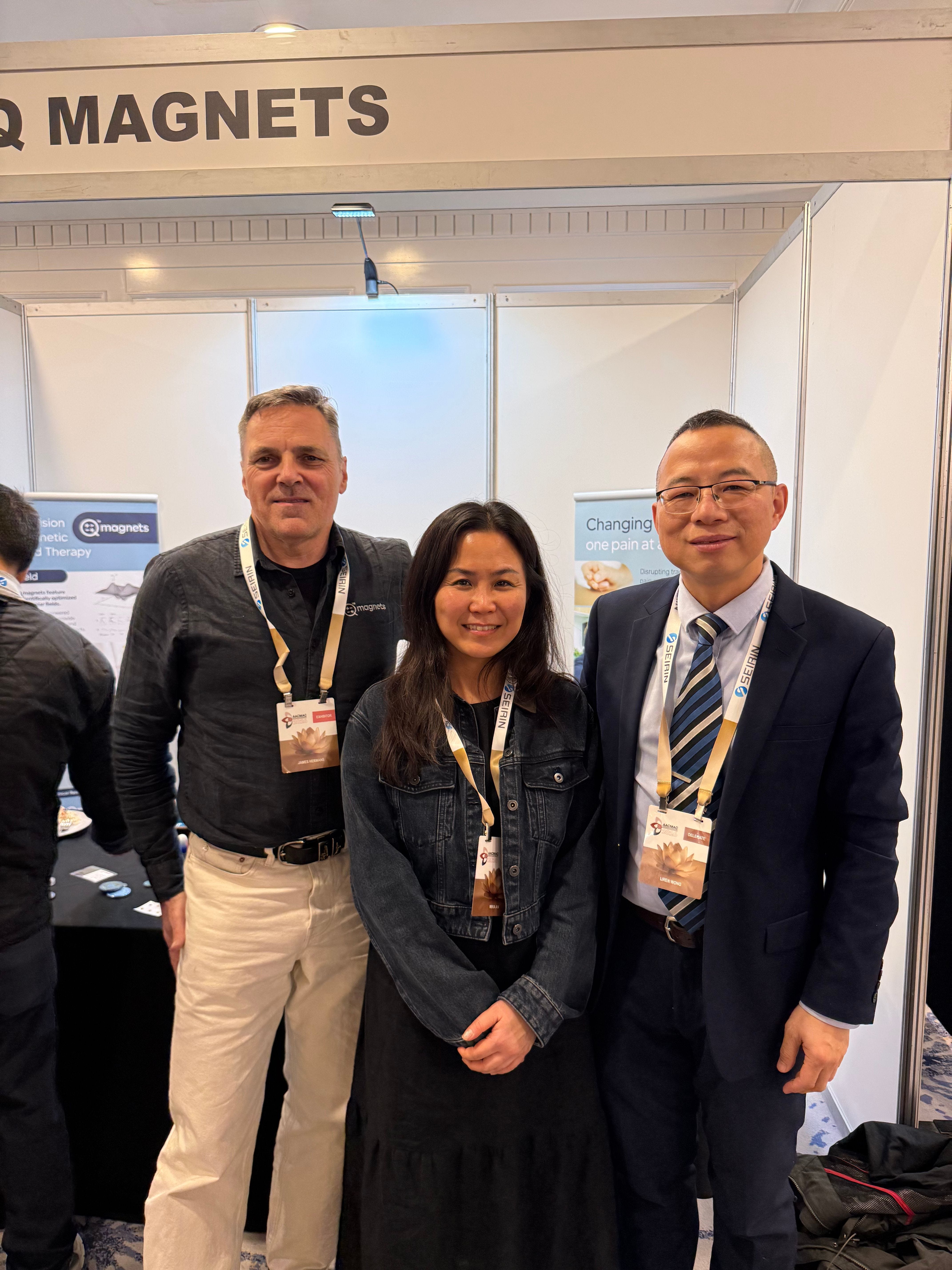
AACMAC 2026 in Melbourne — one of the things I enjoy most about conferences is the opportunity to talk directly with acupuncturists about how they are using Q Magnets.
From Localised Relief to Widespread Comfort
The first message came from a practitioner at the Australian Medical Acupuncture College conference who has asked to remain anonymous.
She is 66 and lives with a chronic pain condition affecting much of her body. Because she does not tolerate analgesic medication well, pain and difficulty moving had increasingly restricted her everyday life.
She initially experimented with individual Q Magnets and reported noticeable relief in the particular areas where she placed them.
Then she tried one of the larger Q Magnet blankets.
After sleeping on it overnight, she described a significant reduction in discomfort across her body. She also reported less stiffness, more energy, better mood and an improved ability to carry out everyday activities.
She now sleeps on the blanket every night.
Her summary was wonderfully simple:
“Q Magnets have greatly improved my quality of life.”
That is her experience, of course, and individual responses vary.
But what interests me about it is the progression.
She first observed a response with localised placement. She then explored a broader application because her symptoms were widespread.
Read more about our Q Blankets here.
That is a much more useful way to think about magnetic field therapy than simply asking whether “magnets work”.
The better questions are: What field? What dose? Where is it placed? And what is the context?
A Practitioner Who Called It a “Complementary Treatment”
Another practitioner from the same AMAC conference sent me a shorter message, but one phrase stood out.
After trialling the Q Magnets, they told me they felt the magnets could “reduce the pain signal” and could be a useful complementary treatment, particularly around osteoarthritic areas and localised strains.
They also made an observation I actually appreciate:
“It takes a bit more work to apply.”
Exactly. But this is from a General Practitioner and acupuncturists in a busy GP Clinic.
Q Magnets are not designed around the idea that you simply put any magnet anywhere on the body and hope for the best
Application matters. But once you get it right, from then on, it’s simple.
The size of the device matters. Tissue depth matters. Anatomical placement matters. And when several magnets are being used, their relationship to one another matters.
That makes the technology a little less convenient than a magnetic bracelet.
It also makes it much more interesting to practitioners.
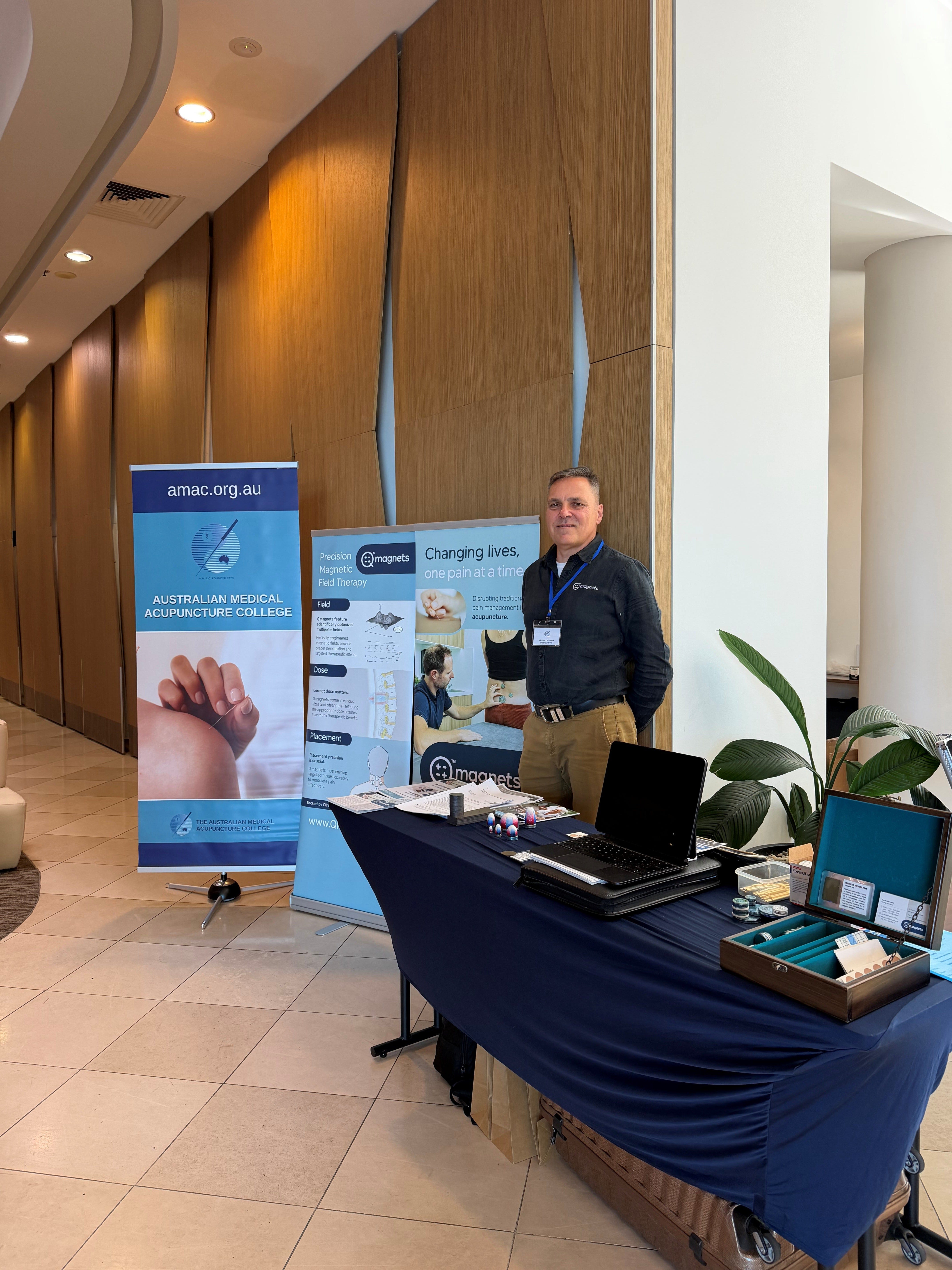
Exhibiting Q Magnets at the Australian Medical Acupuncture College Queensland conference.
Vicki, an OF50-3 and a Story That Felt Strangely Familiar
One of the most encouraging messages came after AACMAC.
Vicki is still an acupuncture student. While we were talking, she told me about her partner’s complicated history of lower back pain.
Around nine years earlier, she had injured the L4/5 disc. Since then, she had experienced severe tailbone pain when sitting, sciatica, shooting leg and foot pain and episodes of protective muscle spasm.
She had been through a considerable amount of treatment, including spinal surgery and multidisciplinary pain management.
Her story immediately reminded me of someone we treated many years ago at our old physiotherapy clinic.
So I gave Vicki an OF50-3 to trial.
The OF50-3 is our larger octapolar Q Magnet. Its size can make it useful when the intention is to create field coverage across two adjacent lumbar levels rather than concentrating on a smaller area.
Three weeks later, Vicki’s partner sent us her feedback.
She reported a significant reduction in pain while sitting, no further spasms during that period, and said She could not recall experiencing the sciatica or leg pain that had previously been so familiar.
After nine years of trying different approaches, She described that change as particularly meaningful.
There were also two very practical observations.
Despite normally being sensitive to adhesives, she reported no irritation from the double-sided QFix40 adhesive used with the OF50-3.
And during her first week of wearing it, the magnet managed to set off an airport security scanner resulting in an unexpected pat-down.
Even magnetic field therapy occasionally comes with travel stories.
Why Vicki’s Partner’s Story Reminded Me of Peter
The earlier physiotherapy case I was thinking about involved a 50-year-old man named Peter who had lived with debilitating lower back pain for around 15 years.
Peter had undergone a laminectomy and later an L5–S1 fusion. She had persistent lower back pain, right-foot numbness, pronounced hypersensitivity around the lumbar spine and very limited sitting tolerance.
At the time, our physiotherapist used several approaches as part of her management, including rehabilitation, hands-on treatment, InterX therapy and an OF50-3 Q Magnet over the lower lumbar region.
Over seven sessions, Peter’s tolerance for sitting and touch improved considerably. The outcome that mattered most to him was that she could eventually sit and paint for five hours something her pain had previously prevented him from doing. Importantly, the original case report did not claim that one intervention alone caused the improvement; the Q Magnet was part of a broader physiotherapy programme.
Read Peter’s chronic lower back pain case study
There is an interesting parallel between the two stories.
Both involved longstanding lumbar problems.
Both involved previous surgery.
Both involved sitting intolerance.
And both involved the larger OF50-3 as part of the approach.
That does not mean everyone with a similar history will respond in the same way.
But these are precisely the sorts of recurring clinical observations that make practitioner feedback worth collecting.
Safety note: Vicki’s partner reported having previously trialled spinal cord stimulators. Q Magnets should not be used near a current spinal cord stimulator, pacemaker, ICD, infusion pump or other magnetically sensitive implanted medical device. Always follow the Instructions for Use and seek professional advice where appropriate.
Rose’s Mum: Sometimes the Most Important Change Is Sleep
The fourth story came from acupuncturists Rose Luo, who also earned a PhD in alternative medicine.
Rose’s mother has severe osteoarthritis. Recently, cold weather combined with a fall had made her discomfort particularly difficult.
Rose tried Q Magnets with her.
The first thing her mum noticed wasn’t an impressive number on a pain scale.
It was sleep.
According to Rose, the very first night her mum used them she had the best night’s sleep she had experienced in months because she was no longer continually waking because of discomfort.
Rose subsequently told me that it had been wonderful seeing her mother more comfortable and sleeping better. She described the Q Magnets as a useful addition alongside her other treatments, and said her mum felt less need to rely as heavily on pain medication.
That last point deserves an important qualification: Q Magnets are not a reason to stop prescribed medication or replace medical care. Medication changes should always be discussed with the treating healthcare professional.
Rose also supplied one of my favourite pieces of practical feedback from the whole series.
Her mum was wearing magnets on both legs and they occasionally ended up sticking to one another.
Rose’s conclusion?
Perhaps they should have used the tape after all.
Sometimes the best product education comes straight from customers.
What These Four Stories Have in Common
These are four very different experiences.
One involved widespread chronic pain.
One came from a practitioner thinking about osteoarthritis and localised strains.
One involved an unusually complex, longstanding lumbar pain history.
One involved an older woman with osteoarthritis whose daughter was simply pleased to see her sleeping more comfortably.
They aren’t clinical trials.
They don’t prove that another person will have the same response.
But they do illustrate something I have observed repeatedly through years of working with practitioners:
Good results are rarely about simply owning a magnet. They are about using the right field, at an appropriate dose, in the right place, for the right context.
That is why conferences remain so valuable to me.
I can explain field geometry on a website.
I can show placement diagrams.
I can talk about multipolar magnetic fields and nervous system modulation.
But standing at a conference table with an acupuncturist or physiotherapist, discussing a real person with a real problem, is different.
Practitioners naturally start asking the useful questions:
Where exactly is the discomfort?
Is it local or referred?
How deep is the structure we are trying to influence?
Which magnet size makes sense?
Where should it go?
What changes when we move it?
That is where Q Magnets become less about “magnetic therapy” as a generic idea and more about precision multipolar medical magnets used through Field | Dose | Placement.
For readers interested in how much correct placement can matter, this recent MagnaBlog revisits Peter’s case and what happened when her magnet was accidentally reapplied incorrectly. When Your Q Magnet Seems to Stop Working…
And if lower back pain is the reason you are exploring Q Magnets, our practical placement resource explains the different lower-back configurations and when the larger OF50-3 may be considered. Lower Back Pain Treatment Protocol
Why I’ll Keep Going to Conferences
There are easier ways to sell products than packing boxes, flying interstate or overseas, setting up exhibition stands and standing on your feet talking for several days.
But I wouldn’t trade it.
Some of the most useful things we have learned about Q Magnets have come from practitioners and customers who went away, experimented carefully, observed what happened and then came back to tell us.
Sometimes the message arrives after a few days.
Sometimes after a few weeks.
And occasionally it describes an outcome that makes me think:
We’ve seen something rather like this before.
That is how experience accumulates.
One practitioner.
One patient.
One placement.
One observation at a time.
If you’re a health practitioner interested in exploring Q Magnets as an adjunct within your practice, you can find information about our practitioner programme here. Q Magnets Practitioner Program
Q Magnets are non-powered multipolar magnetic devices intended to potentially provide comfort or temporary localised relief of minor aches and pains. Individual responses vary. They are not a substitute for medical diagnosis, prescribed treatment or professional healthcare advice.
Until next time, stay curious and stay well,
James Hermans and the Q Magnets Team
Weekly Reframe
The question isn’t simply, “Do magnets work?”
A better question is:
What field, at what dose, placed where — and for whom?
Featured Article
Why magnet design matters? Learning from Cow Magnets
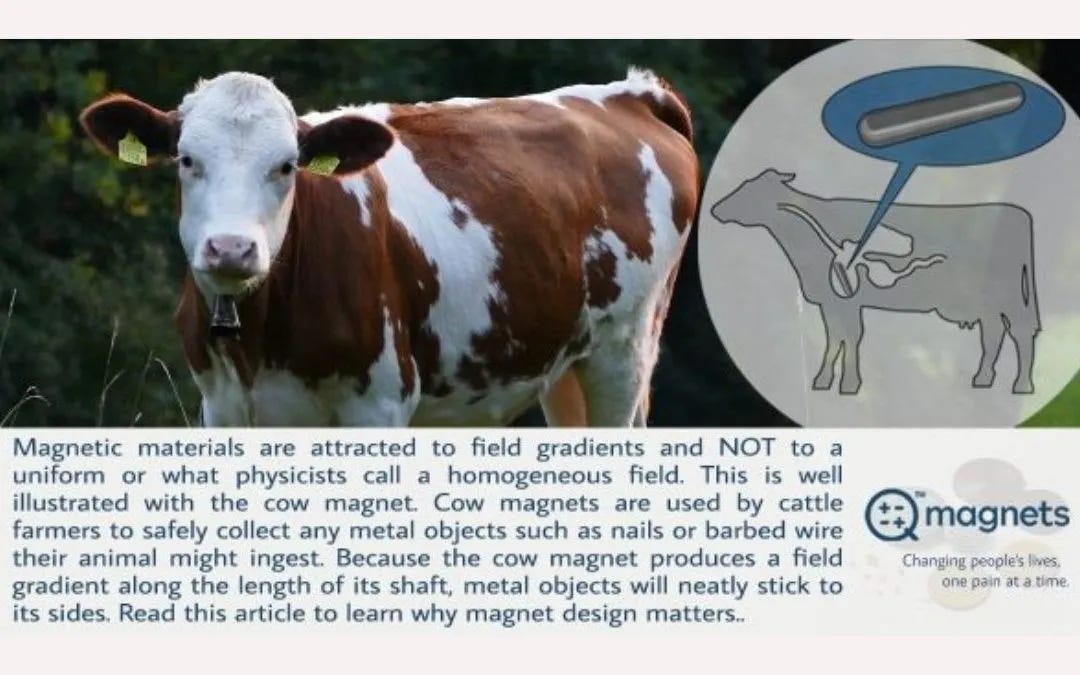
Magnetic Field Gradients

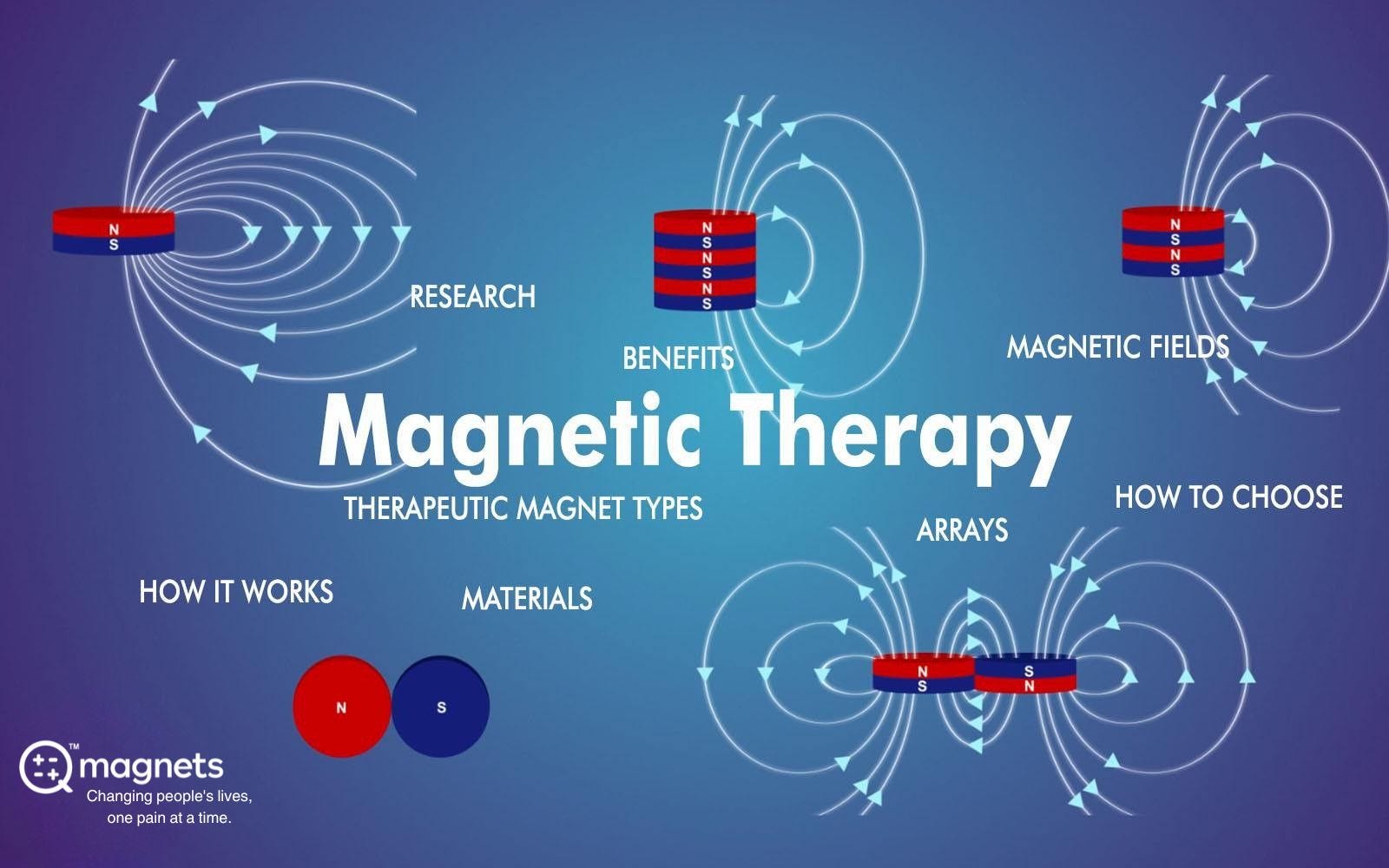
Magnetic Therapy
I always get a little skeptical when magnetic therapy comes up. That said, I appreciate that you emphasize Placement and Dose rather than just selling it as a magic fix-all bracelet.
The airport security detail made me chuckle!