Greetings from Q Magnets!
Most people naturally place a Q Magnet exactly where it hurts.
In many cases, that’s exactly where you should begin.
The most painful or tender area is often the best starting point for magnetic field therapy because it places the magnetic field directly over the tissues that are causing the most discomfort.
But experienced practitioners don’t always stop there.
Sometimes, they ask a different question:
“What else could be contributing to this pain?”
That simple shift in thinking can sometimes change the outcome.
Pain Doesn’t Always Tell the Whole Story
Pain is often more complex than it first appears.
The sore spot may be the result of overloaded muscles, tight fascia, irritated nerves, altered movement patterns or structures working together rather than one isolated tissue.
Physiotherapists, osteopaths, chiropractors, massage therapists and acupuncturists have long recognised this principle, even though they may explain it in different ways.
Some look for muscular trigger points.
Others assess movement patterns or biomechanics.
Acupuncturists may select points some distance from the painful area based on traditional acupuncture principles.
Although the approaches differ, they often arrive at a similar conclusion:
Sometimes treating only where it hurts doesn’t provide the best outcome.
A Good Example: Plantar Heel Pain
Plantar fasciitis is a perfect example.
Most people instinctively place a Q Magnet directly over the painful part of the heel or the tender portion of the plantar fascia.
That’s still exactly what we recommend as the primary placement.
But the recently updated Heel Pain & Plantar Fasciitis protocol also includes something new.
It introduces Additional Placement Insights.
Alongside the local heel placement, experienced practitioners may also consider carefully selected distal placements, including:
Trigger points within the soleus muscle
Specific acupuncture points that are traditionally associated with the lower leg and foot
These additional placements aren’t intended to replace the local magnet.
They’re designed to complement it.
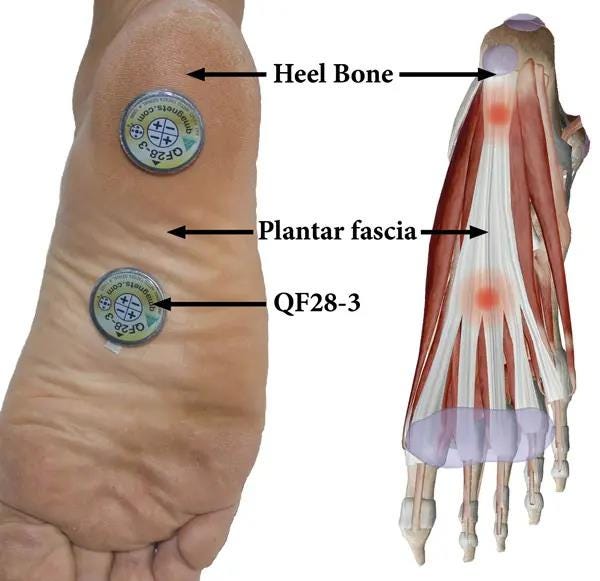
A Clinical Observation That Prompted Us to Think Differently
A physiotherapist recently shared an interesting clinical observation with us.
One of their patients had been using Q Magnets over the painful plantar fascia with some benefit, but progress had largely plateaued.
Rather than changing the original placement, the practitioner left those magnets exactly where they were.
Then they identified tender trigger points within the soleus muscle and added two more Q Magnets over those areas.
According to the practitioner, that small addition made all the difference.
While this is simply one clinical observation—not formal research—it illustrates an important principle.
Sometimes the most effective application isn’t about replacing the original placement.
It’s about thoughtfully expanding it.
This Principle Has Also Appeared in Research
Interestingly, the idea of looking beyond a painful area isn’t limited to everyday clinical practice.
One of the better-known studies involving multipolar medical magnets examined people living with post-polio syndrome, a condition often associated with persistent muscular pain. Rather than placing magnets randomly, researchers applied specially designed static multipolar magnets directly over carefully identified pain trigger points.
In this double-blind, randomised, placebo-controlled trial, participants receiving the active multipolar magnets reported greater reductions in pain than those receiving placebo devices after just 45 minutes of application.
While post-polio syndrome is very different from plantar heel pain, the study highlights an important principle that experienced practitioners recognise across many musculoskeletal conditions:
Thoughtful placement matters.
It’s not simply about using a magnet—it’s about selecting an appropriate magnetic field and placing it over clinically relevant tissues or trigger points.
If you’d like to explore this landmark study in more detail, we’ve summarised the research here:
👉 Static Magnets Providing Hope for Post-Polio Syndrome Pain Sufferers
https://qmagnets.com/static-magnets-providing-hope-for-post-polio-syndrome-pain-sufferers/
Why Might That Help?
There isn’t one simple explanation.
Pain may involve multiple tissues working together.
A muscle higher up the leg may be contributing to increased tension through the calf and into the plantar fascia.
Trigger points may be influencing discomfort or movement.
Acupuncture points have long been used as part of traditional approaches to support pain and function.
Every person is different.
That’s why experienced practitioners often assess more than just the site of pain before deciding where additional support may be appropriate.
Local Plus Distal
One of the biggest misconceptions is that you must choose one approach or the other.
Local placement.
Or distal placement.
In reality, they’re often used together.
The painful area remains the primary target.
Additional placements simply broaden the overall application based on anatomy, trigger points, acupuncture principles or other clinical findings.
It’s not about putting magnets everywhere.
It’s about placing them with purpose.
Important
While trigger points, acupuncture points and additional placements may complement your Q Magnets application, they are not a substitute for an accurate diagnosis. If your pain is severe, persists, worsens, follows significant trauma, or you are unsure of the cause, seek assessment from an appropriately qualified healthcare professional. Identifying and treating the underlying cause should always take priority over managing symptoms alone.
The Takeaway
If you’re using Q Magnets, start where it hurts.
In many cases, that’s exactly the right place to begin.
But if your progress slows or your condition is more persistent than expected, it may be worth asking a broader question:
Is there somewhere else that could also be contributing?
Sometimes the best results don’t come from moving the original magnet.
Sometimes they come from adding one or two more in carefully selected locations.
Because the goal isn’t simply to chase the pain.
It’s to better understand what the body might be telling us.
Looking Beyond the Pain
The painful area is often the best place to start, but it may not be the only place worth considering.
Where appropriate, experienced practitioners may combine local placement with carefully selected trigger points, acupuncture points, or other related anatomical locations.
This is the thinking behind the new Additional Placement Insights now being added to selected Q Magnets protocol pages helping users understand not just where it hurts, but where additional support may sometimes be beneficial.
Until next time, stay curious and stay well,
James Hermans
and the Q Magnets Team
Weekly Reframe
“You see, but you do not observe.”
— Sherlock Holmes (Arthur Conan Doyle)
Most people see the painful spot.
Experienced practitioners observe the whole picture.
They don’t ignore the painful area, it usually remains the best place to start. But they also look for related muscles, trigger points, movement patterns and other structures that may be contributing to the problem.
Sometimes the difference isn’t a different magnet.
It’s seeing what was there all along.
Don’t just see the pain. Observe the whole picture.
Featured Articles
Why Pain Becomes Chronic And Why Early Treatment Matters

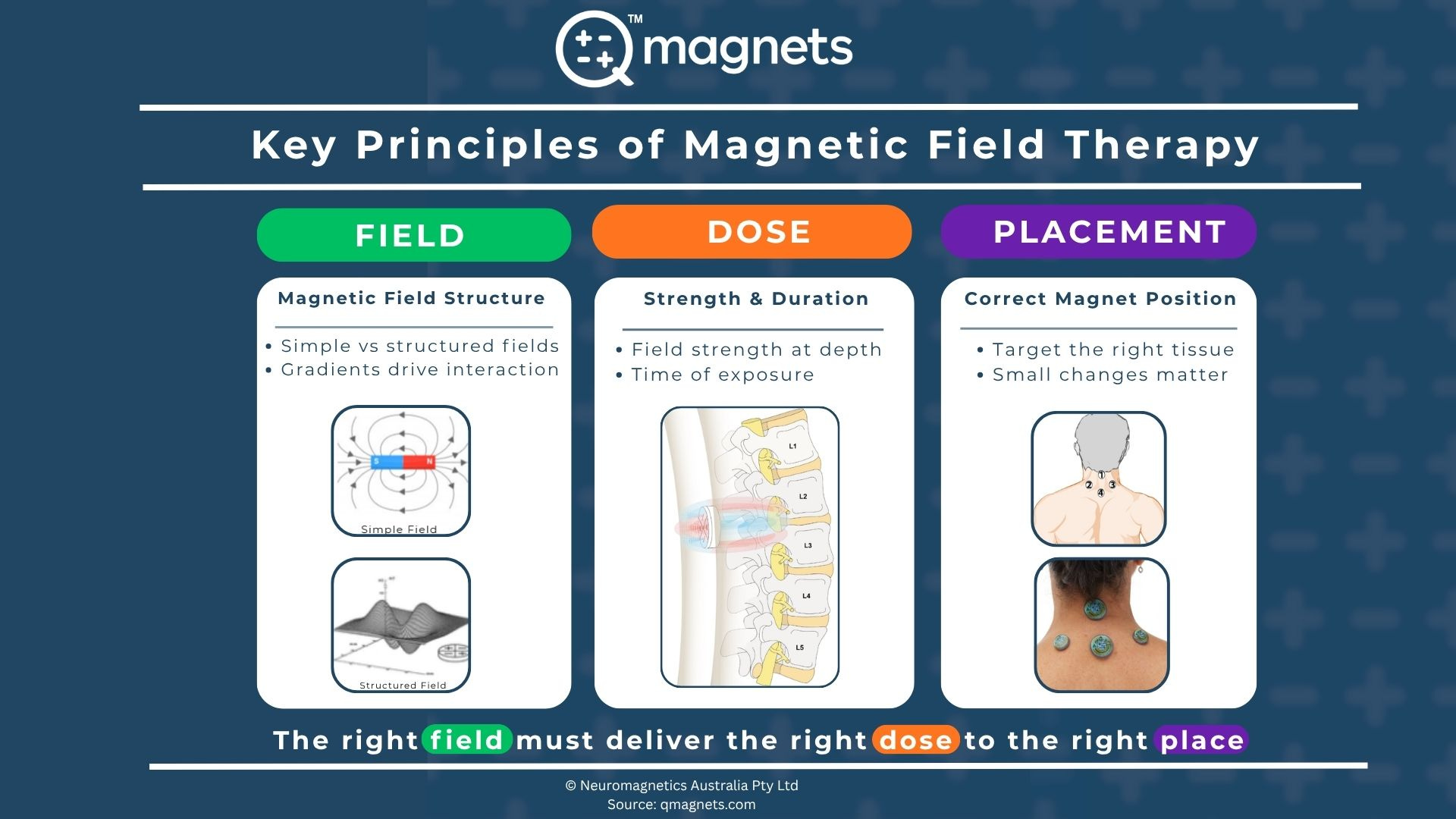
Field, Dose and Placement in Magnetic Field Therapy
Magnetic Therapy