Most injuries heal.
Muscles repair. Ligaments strengthen. Inflammation subsides.
Yet many people experience pain long after tissues should have recovered.
Modern pain science now recognises that this often occurs because the nervous system itself becomes sensitized.
Understanding how this process unfolds helps explain why early treatment of injury can make such a profound difference.
Pain Does Not Always Reflect Tissue Damage
For decades pain was thought to be a direct signal from injured tissue.
Research in neuroscience now shows that pain is produced by the nervous system interpreting signals from the body.
When these signals continue for long enough, the nervous system can become increasingly responsive.
This process is sometimes called the pain chronification cascade.
The Pain Chronification Cascade
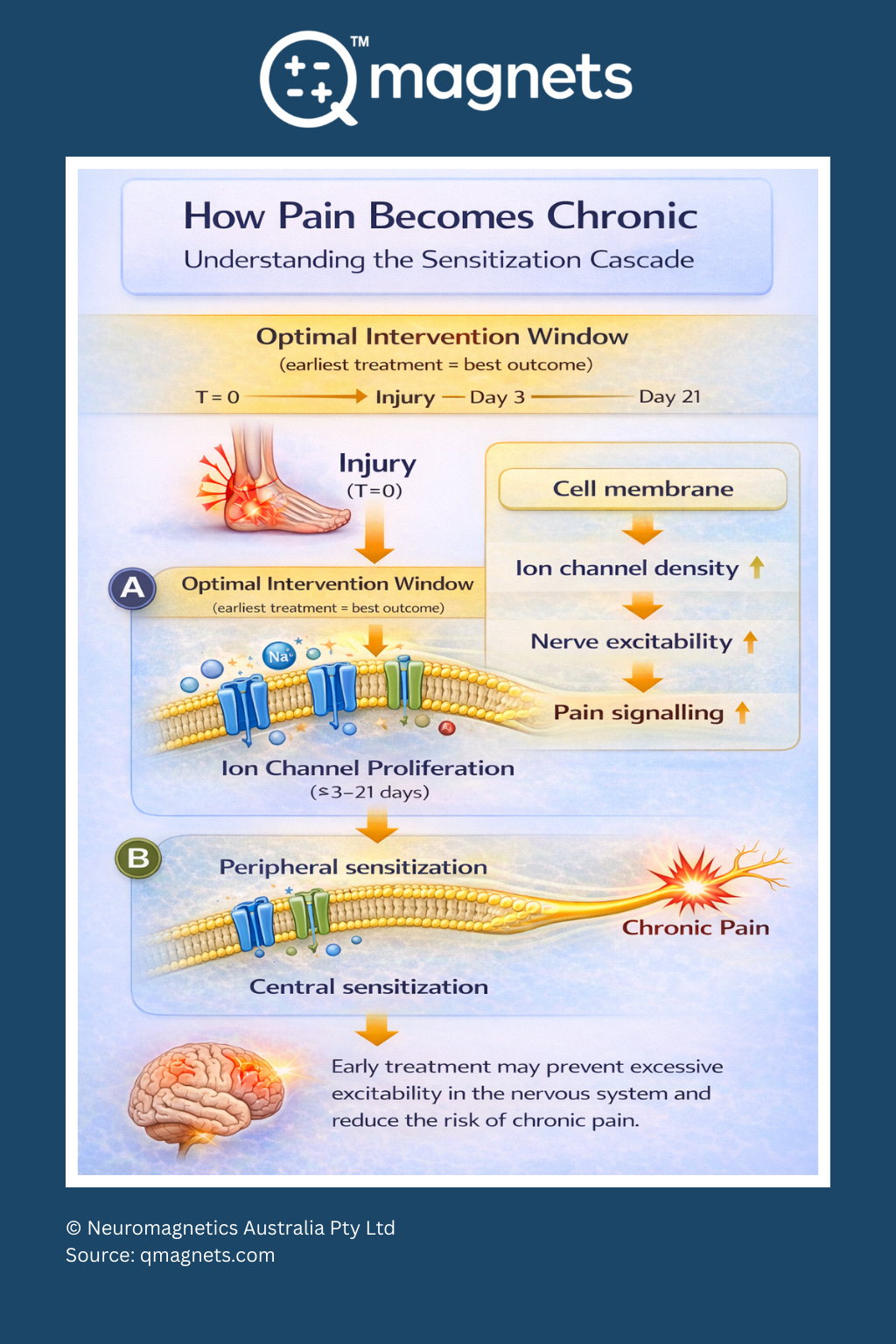
Researchers describe several stages that can occur after injury.
Stage 1 — Injury and inflammation
Chemical signals released by injured tissue activate nearby nerves.
Pain at this stage is protective.
Stage 2 — Peripheral sensitization
Over the following days, nerve cells may increase the number of ion channels in their membranes.
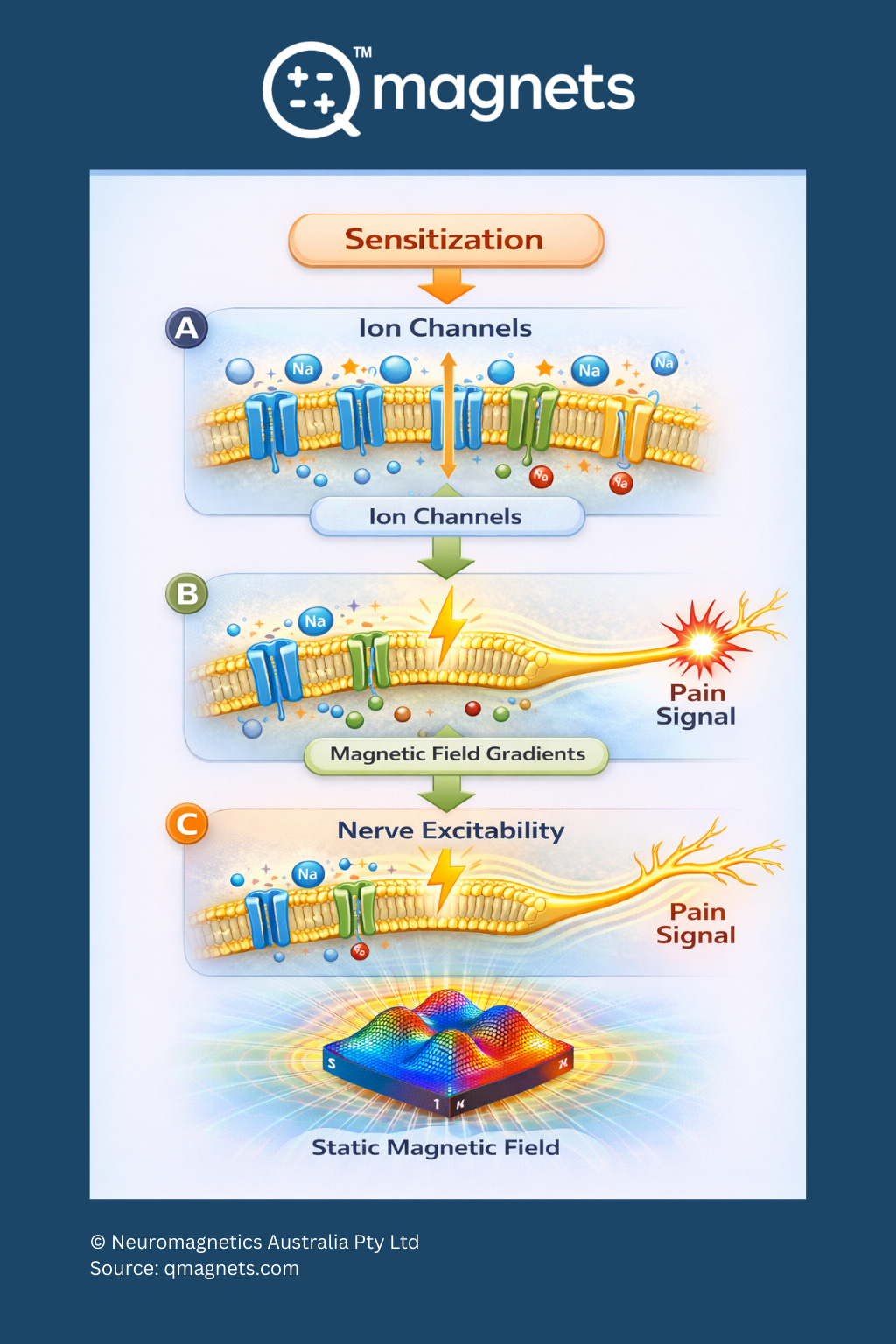
These channels regulate electrical activity in nerves.
When their number increases, nerves become more excitable.
Even minor stimulation can begin triggering pain signals.
Stage 3 — Central sensitization
If strong nerve signals continue to reach the spinal cord, neurons there may also become more responsive.
This can lead to:
• exaggerated pain responses
• pain from normally harmless stimuli
• pain spreading beyond the original injury
Stage 4 — Brain adaptation
With time, networks in the brain involved in attention, emotion, and threat detection may reinforce these signals.
At this point pain becomes harder to reverse.
Why Early Treatment Matters
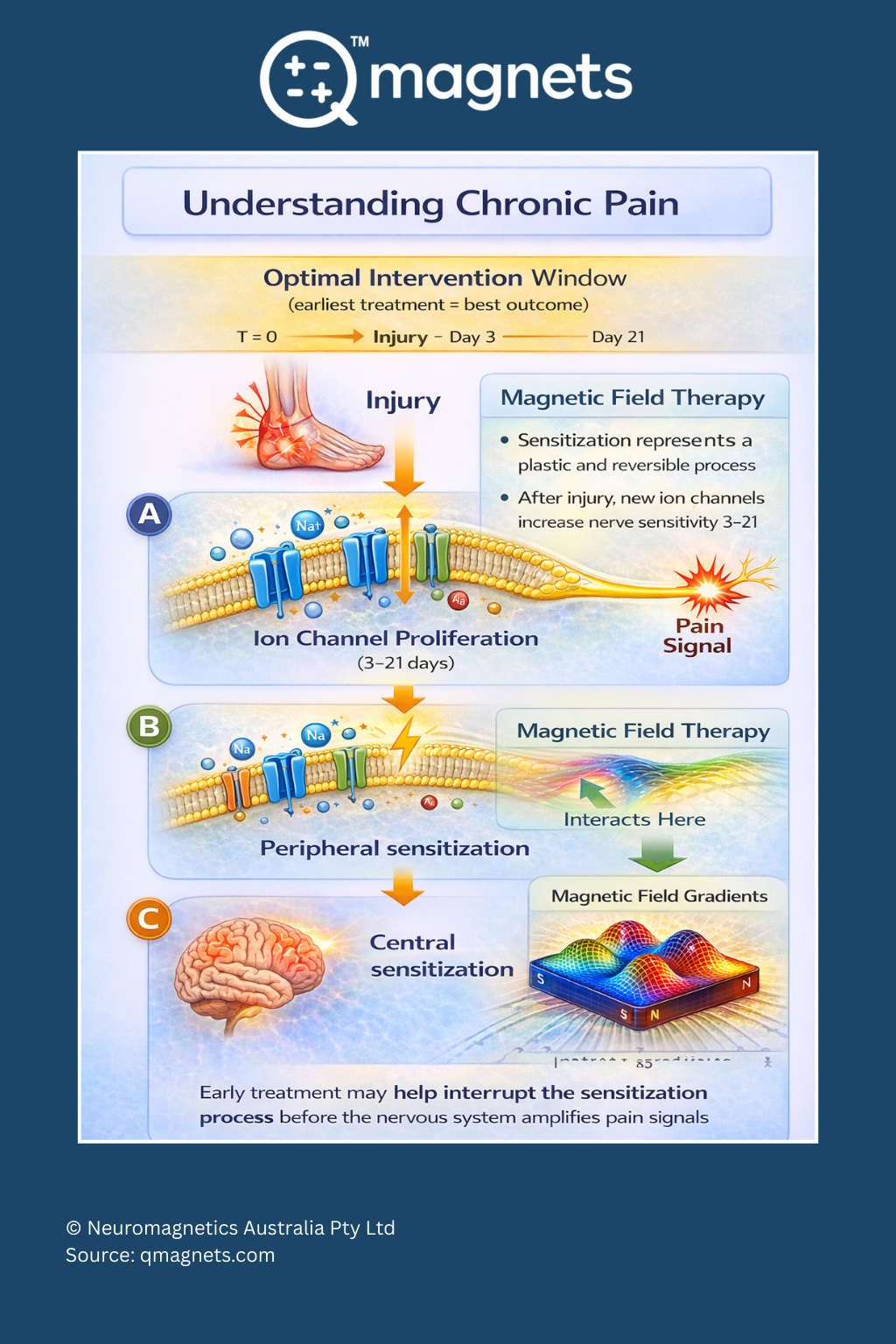
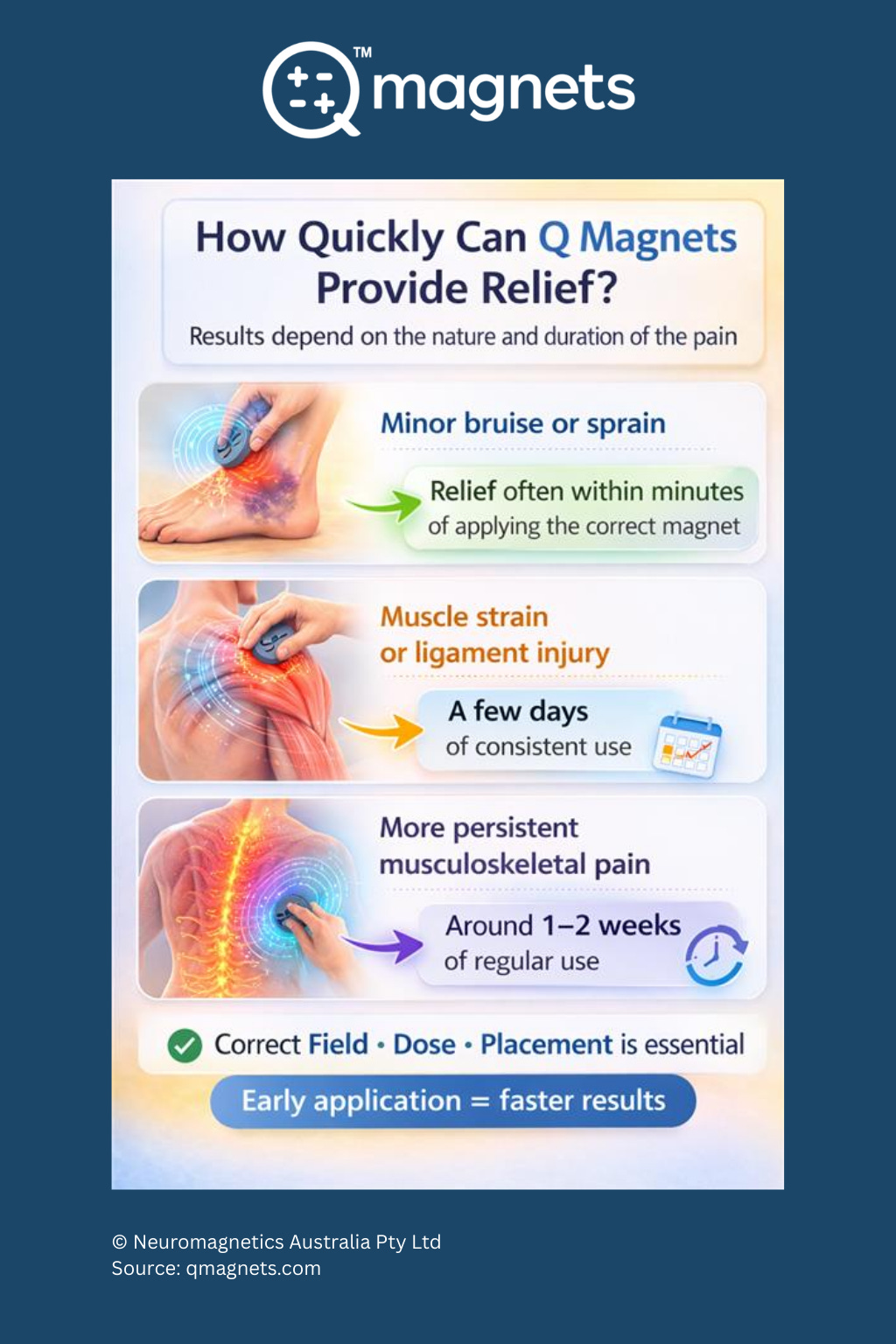
Because sensitization develops progressively, early intervention may help prevent this cascade from escalating.
Reducing the intensity and duration of nerve signalling soon after injury may limit how strongly the nervous system adapts.
Magnetic Field Gradients and Nerve Excitability
Laboratory studies have explored whether static magnetic field gradients can influence neural activity.
Experiments on sensory neurons have shown that certain magnetic fields may temporarily alter nerve firing behaviour.
Because nerve signalling depends on ion movement across the cell membrane, magnetic fields interacting with electrically active tissues may influence this process.
Field | Dose | Placement
In practical magnetic therapy applications, outcomes depend on three variables:
Field
Strength and gradient of the magnetic field
Dose
Magnet size, depth of penetration and duration of exposure
Placement
Location relative to affected nerves or tissues
Understanding these factors helps explain why results can vary and why correct application matters.
The Bigger Picture
Chronic pain rarely develops overnight.
It often reflects a gradual interaction between:
• tissue injury
• peripheral nerve sensitization
• spinal cord amplification
• brain processing of pain signals
Understanding this process helps explain why early management of injury may influence long-term outcomes, and why many people like to keep their Q Magnets close at hand when minor injuries occur.
For a more comprehensive discussion on this topic, please see our recent blog post…
Why Pain Becomes Chronic And Why Early Treatment Matters
Until next time, stay curious and stay well,
James Hermans
and the Q Magnets Team
Featured Article
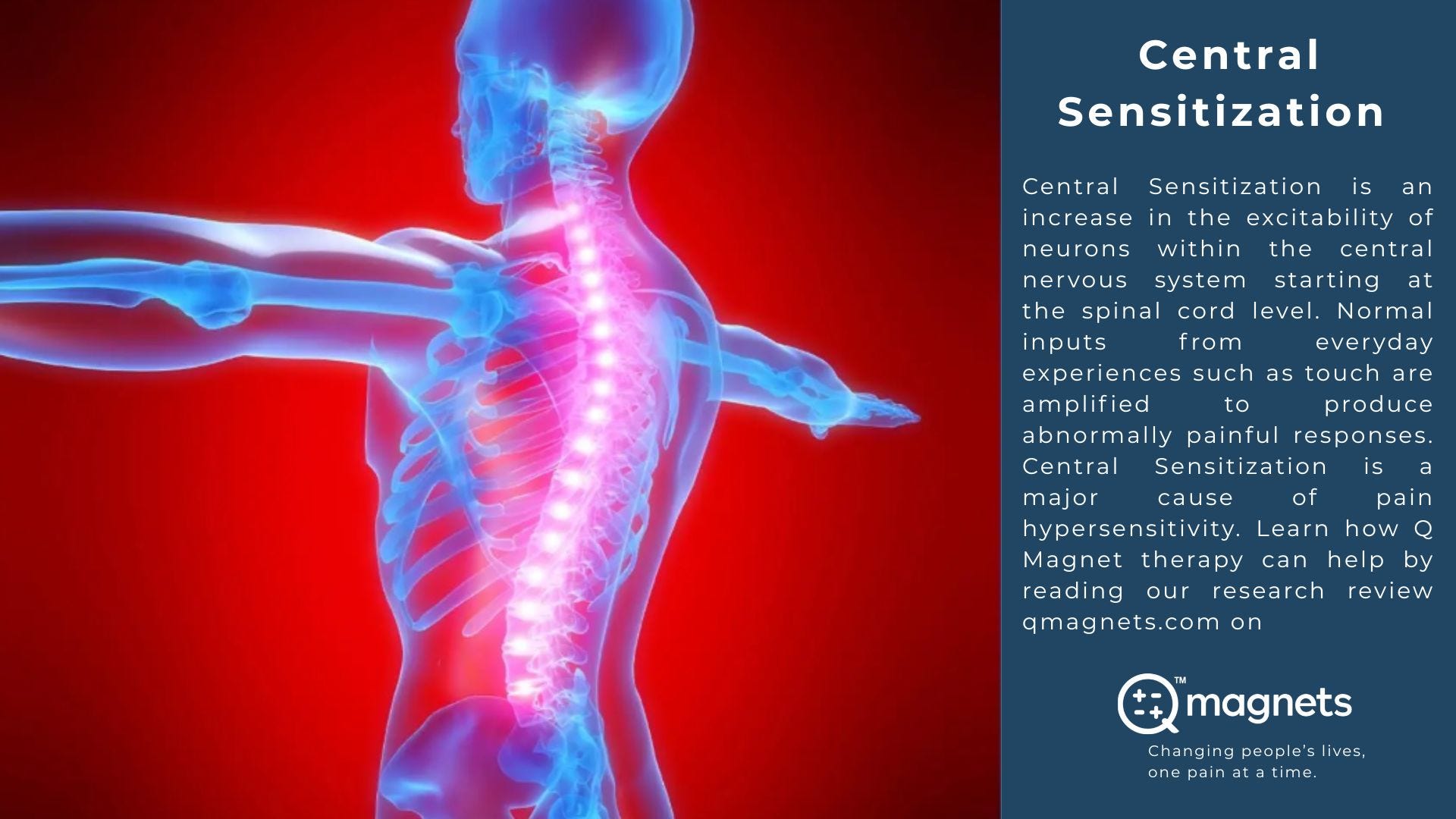
Central Sensitization
The role of sympathetic nervous system in chronic pain and Q Magnet therapy application
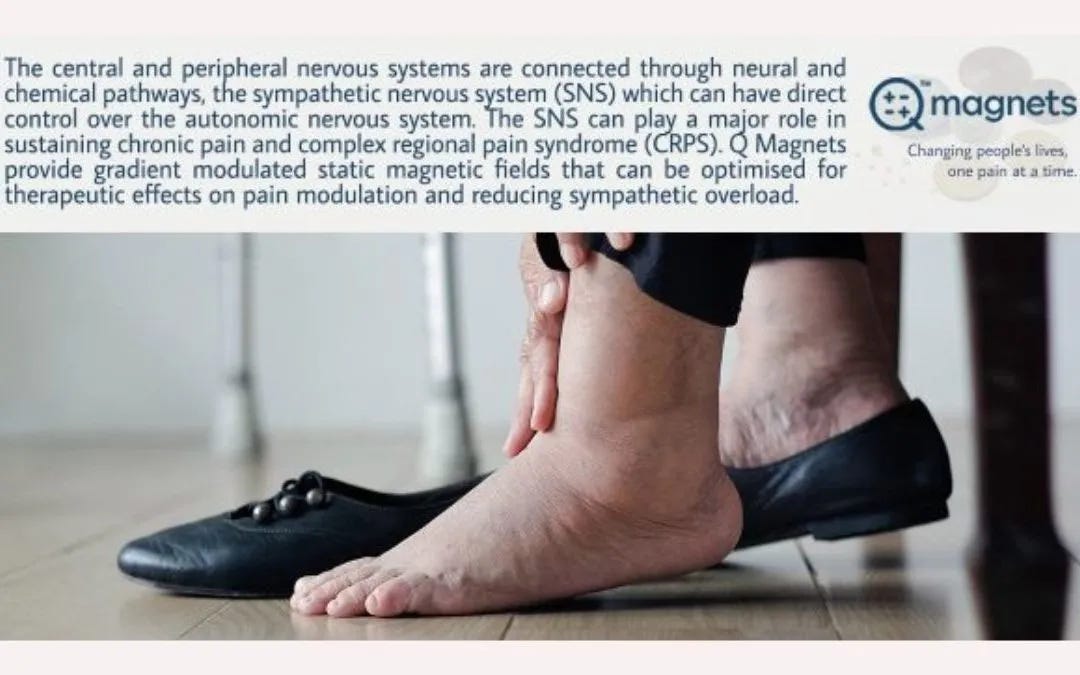
Chronic Pain Treatment with Magnetic Therapy