Greetings from Q Magnets!
Artificial intelligence can locate published research and explain it in remarkably convincing language. But a polished answer is not necessarily a correct interpretation.

While reading Arthur Firstenberg’s The Invisible Rainbow, I was struck by accounts of Europe’s eighteenth-century fascination with electricity described at the time as “electronomania.”
Electrical demonstrations became fashionable entertainment. People formed human chains to experience shocks, wealthy households displayed elaborate electrical machines, and electricity was introduced into hospitals and medical practices.
Early experimenters also observed that people responded differently. A small electrical exposure could profoundly affect one person, while another appeared unaffected by something stronger.
This made me wonder whether people might also vary in their responses to multipolar static magnetic fields.
An AI research assistant produced a thoughtful answer and referred to two studies with apparently different results. One was the Kuipers study, in which 15 volunteers lay on a mattress containing 95 magnets for one hour. It found no significant change in experimentally induced pain.
The comparison sounded convincing but there was a critical problem.
The mattress contained numerous magnets with the same pole facing the participant. They provided general exposure across the body, with no targeted placement over a particular nerve, trigger point, joint or source of pain.
This was nothing like a purpose-designed multipolar medical magnet applied at a selected anatomical location.
A more relevant study by László and colleagues used an inhomogeneous static magnetic field a field whose strength or direction changes across space, creating magnetic-field gradients. The participant’s finger was positioned directly within the field apparatus, and the researchers detected an increase in thermal pain threshold.

Importantly, this apparatus arose from earlier experiments in which the researchers compared different magnet arrangements. They reported that optimising the distribution of the static magnetic field improved its analgesic effect in mice.
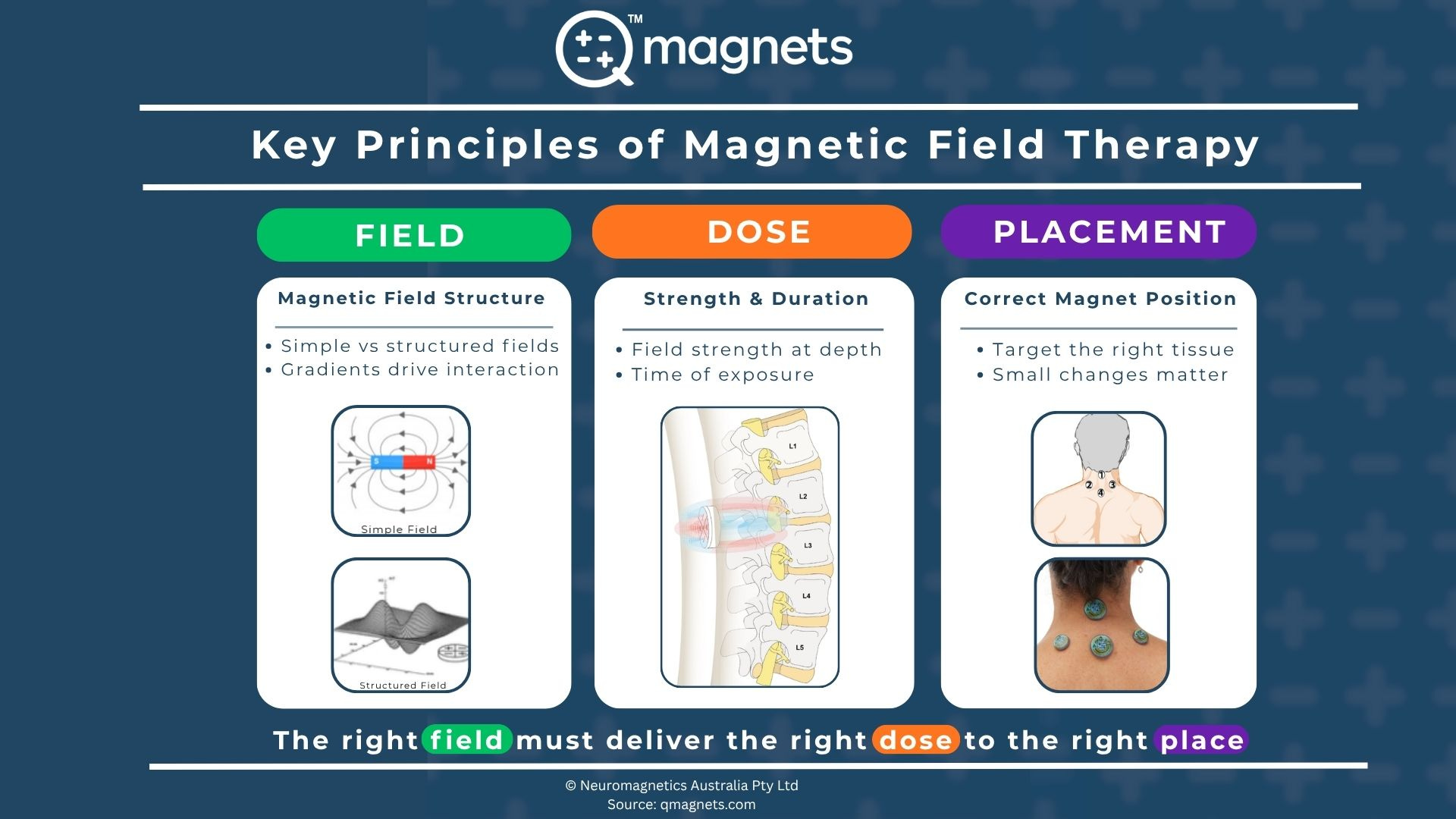
The human study does not prove the clinical efficacy of Q Magnets. However, this research sequence adds to evidence that different static magnetic-field configurations should not be treated as equivalent. Field geometry, polarity arrangement, gradients, dose and placement may all influence the biological response.
The apparent disagreement between the Kuipers and László studies may therefore tell us more about differences between the interventions than differences between the people receiving them.
The AI-generated answer was articulate, cautious and supported by genuine research. Most readers and probably many clinicians could easily have accepted it.
Recognising the weakness required specialist knowledge of magnetic-field configuration and therapeutic placement.
That is the wider lesson:
If you don’t know your subject, it’s easy to be misled by AI not because every answer is obviously wrong, but because the most dangerous errors can sound entirely reasonable.
AI is an extraordinarily useful research assistant, but it does not replace subject knowledge or careful examination of the original methodology.
The better scientific question is not simply:
“Do magnets work?”
It is:
What field, delivered at what dose, and placed where, produces what effect in which person?
Read the complete article:

Until next time, stay curious and stay well,
James Hermans
and the Q Magnets Team
Weekly Reframe
“A little learning is a dangerous thing.”
— Alexander Pope
The Reframe
In the age of AI, a little learning can sound like a lot.
AI can produce a polished explanation, cite genuine research and still overlook the detail that changes the conclusion.
That is what makes it so useful and potentially misleading. The greatest risk is not the obviously foolish answer. It is the plausible answer that sounds authoritative to anyone who does not know the subject well enough to challenge it.
Expertise is not knowing everything. It is knowing which questions must still be asked:
Were the interventions genuinely comparable?
Did the methodology support the conclusion?
Was an important detail hidden behind a broad label?
Use AI to expand your thinking not to suspend it.
Featured Article
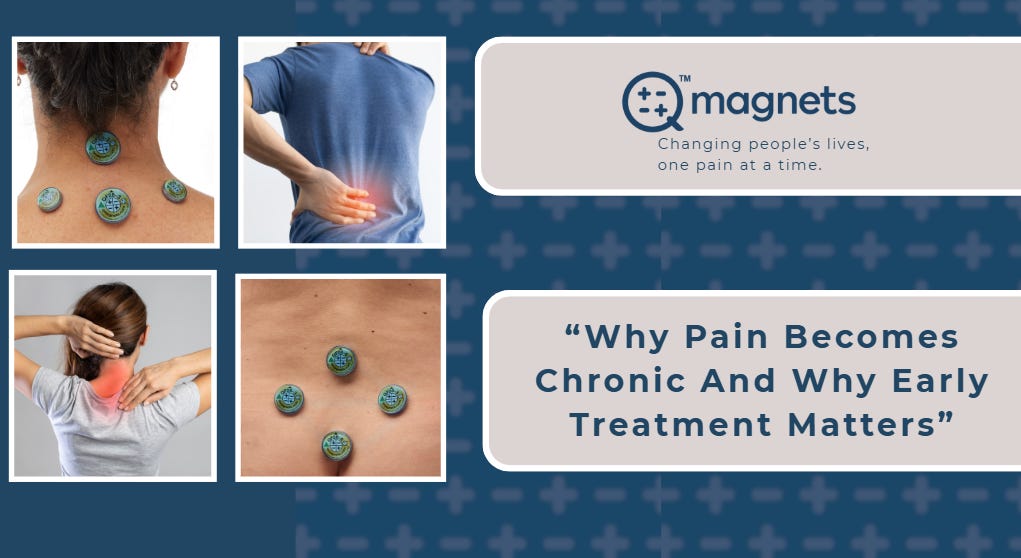
Why Pain Becomes Chronic And Why Early Treatment Matters
Field, Dose and Placement in Magnetic Field Therapy
Magnetic Therapy