Greetings!
When we recently updated our About Us page, it reminded me that I have probably not done enough to tell the full story of where Q Magnets came from.
Q Magnets did not begin as a typical consumer health product.
They grew out of clinical practice, patient experience, early research, and the work of people who were willing to explore a very different approach to pain management.
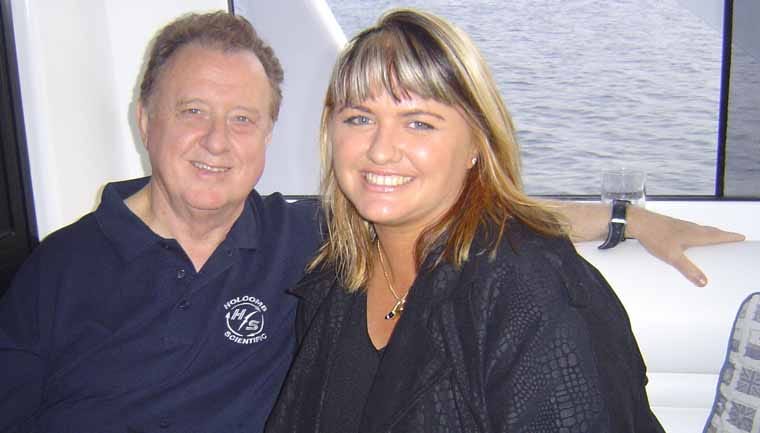
A very important part of that story begins with Dr Robert Holcomb MD, PhD.
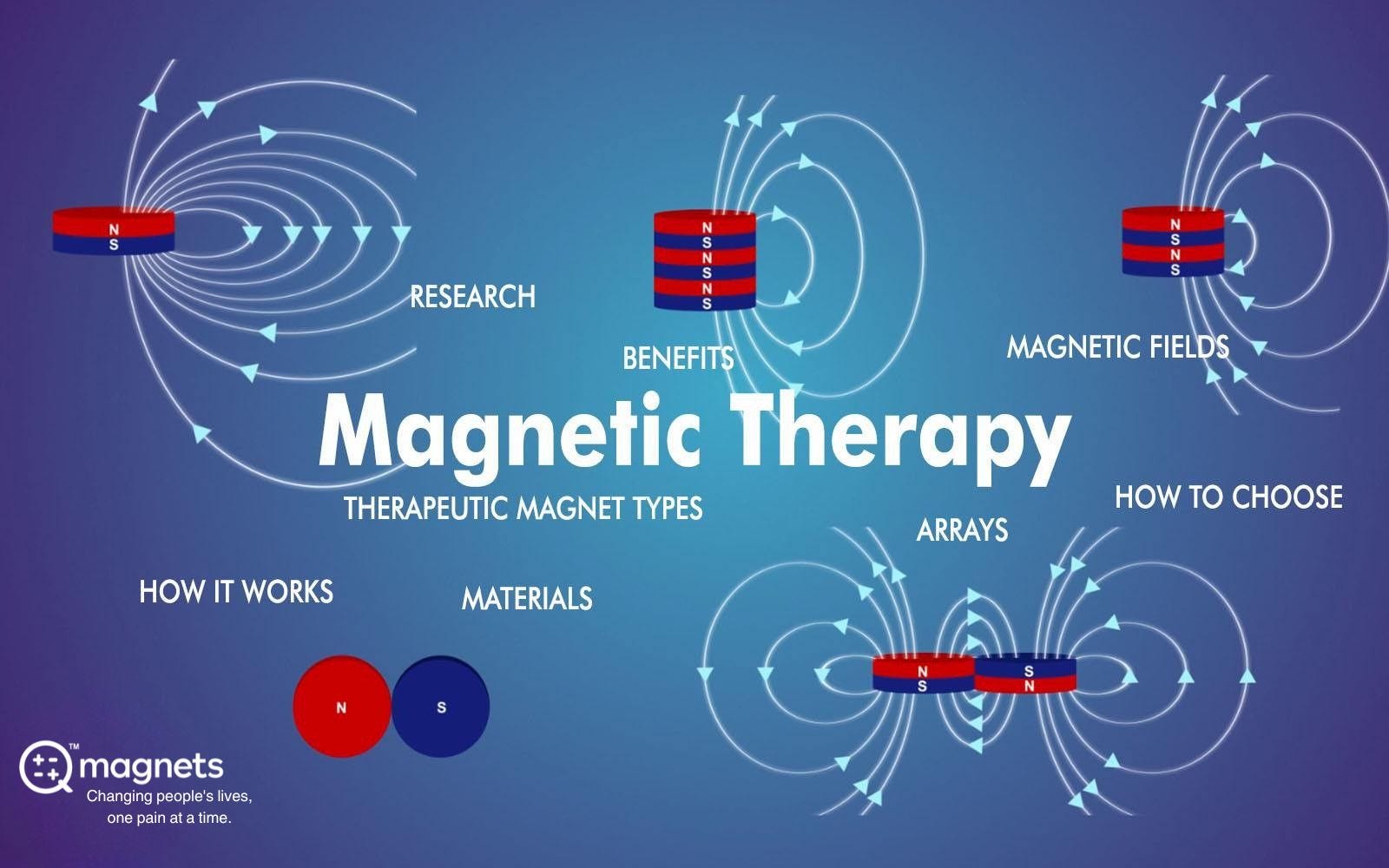
Dr Holcomb was a pioneer in the field of therapeutic static magnetic fields and the inventor of the original Magna Bloc technology. He worked with Dr Michael McLean at Vanderbilt University on some of the early research into quadrupolar magnet arrays and their possible role in pain therapy.
That early work mattered because it was not simply about “using magnets.”
It was about field design, field gradients, polarity patterns, biological effects, and the critical importance of placement.
In other words, it was about moving beyond the idea of a simple north-south magnet and asking a much more serious question:
Can a specifically designed static magnetic field be applied in a way that produces a useful therapeutic effect?
For Dianne and me, that question became the beginning of a very long journey.
Dianne’s role in the early clinical work
My wife, Dianne Hermans, was a physiotherapist. At the time, we had our clinic, Lifestyle Therapies, in Queensland.
Dianne first became interested in therapeutic magnets after suffering neck injuries from a car accident. She began using magnets herself and noticed the difference they made. But Dianne was not the type of person to stop at personal experience.
As a physiotherapist, she wanted to understand how the technology could be used properly with patients.
That led her to travel to Vanderbilt University a number of times between 1999 and 2001, where she learned from Dr Holcomb and became closely involved in the practical application of quadrupolar magnets.
Dr Holcomb once said of Dianne that, apart from himself, no one knew more about how to apply quadrupolar magnets as a therapy for chronic and complex pain, which said a great deal about Dianne’s clinical skills.
She was not just using magnets in a general way. She was learning how to think about placement, pain patterns, tissue depth, polarity, field exposure, and patient response.
That clinical experience became central to the development of Q Magnets.
The clinic was our proving ground
At Lifestyle Therapies, Dianne used quadrupolar magnets as an adjunct to normal physiotherapy treatment.
The magnets were not presented as a replacement for diagnosis, physiotherapy, medical care, or good clinical judgement. They were used as an additional tool within a clinical setting.
Patients were assessed. The magnets were placed carefully. Responses were observed. Placement methods were refined.
Over time, we learned that one of the greatest advantages of the technology was that patients could continue using the magnets between visits.
That meant the support did not have to stop when the appointment ended.
This idea has stayed with me ever since:
The best clinical tools should not remain locked inside treatment rooms.
If something is safe, practical, reusable, and can be taught properly, then patients should be able to use it at home as part of their own self-care.
That principle is still at the heart of Q Magnets today.
From four discs to more complex magnetic field designs
One of the things worth understanding about the early Magna Bloc work is that it was still based on combining four separate bipolar disc magnets into a quadrupolar array.
That was a significant step forward compared with simple bipolar magnets, but it also had a limitation.
When four separate discs are combined, the practical configuration is essentially quadrupolar.
See my video explanation here: Magna Bloc Q magnets Comparison - Why Q magnets are superior
One of the important developments we made later was learning how to create quadrupolar and hexapolar magnets from a single magnet body. From there, we went on to develop octapolar designs and later concentric alternating polarity rings.
That opened up a much greater level of complexity and versatility in the applied magnetic fields.
This became a major part of how Q Magnets evolved beyond the early designs.
We were no longer thinking only in terms of whether a magnet was north or south, or whether four separate magnets could be arranged in a square.
We were thinking in terms of field geometry.
How many poles?
What pattern?
What size?
What strength?
What depth?
What body region?
What pain presentation?
What placement strategy?
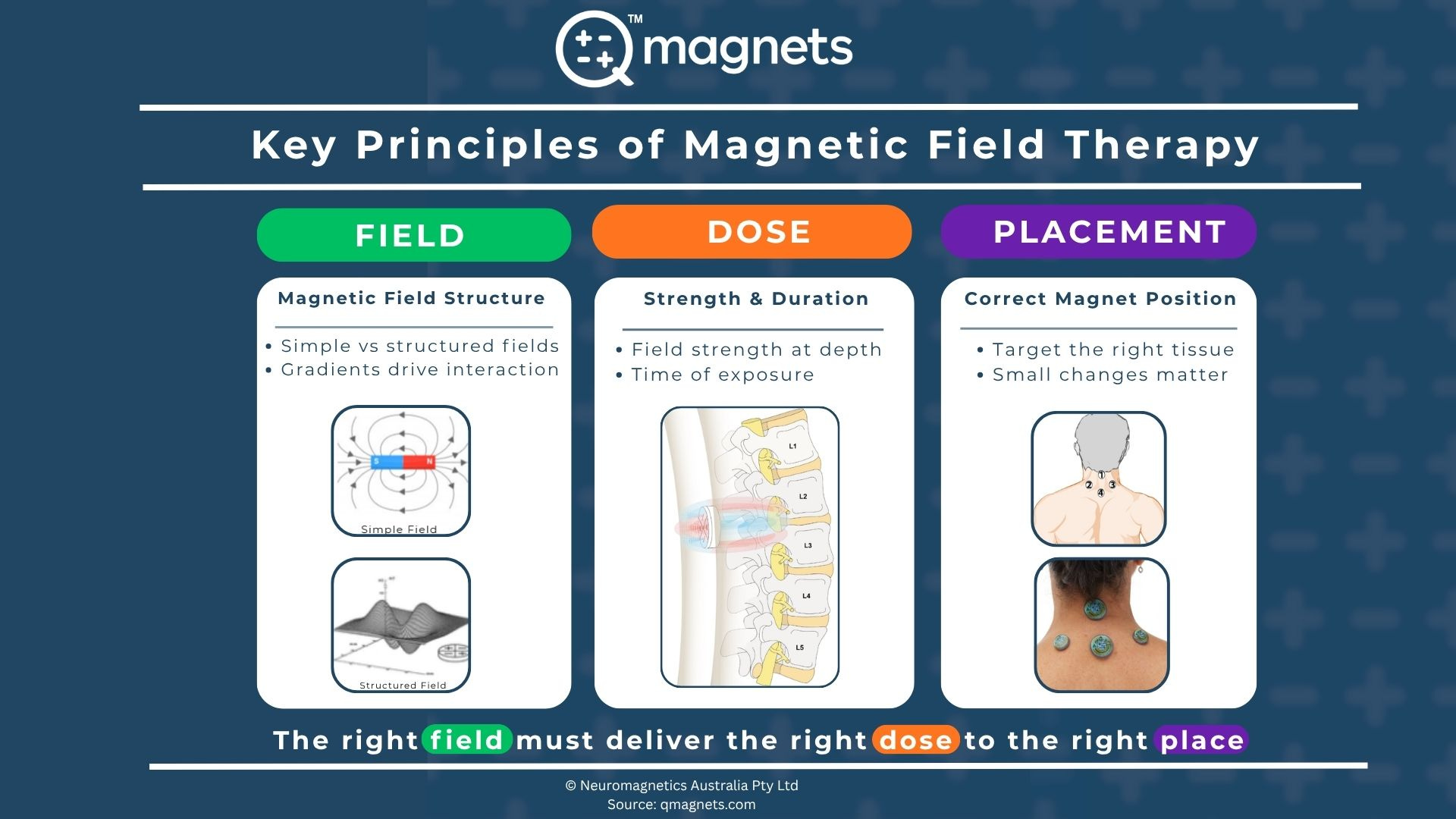
That is where our thinking around Field | Dose | Placement became so important.
The field matters because the shape and polarity of the magnetic field influence how it is applied to the body.
The dose matters because different sizes and strengths may be more appropriate for different tissues, body regions, and pain presentations.
The placement matters because even a well-designed magnet still has to be applied in the right location to have the best chance of helping.
This is why Q Magnets have always placed so much emphasis on placement guides, practitioner education, and practical instructions.
The magnet itself is only one part of the system.
How it is used matters just as much.
A practical system for clinics
Another important development came directly from clinical practice.
When magnets are used in a clinic, the practitioner often wants the patient to continue wearing them between visits. That can be very helpful, but it also creates a practical problem.
How do you keep track of reusable clinical tools once they leave the clinic?
In our own practice, we developed a simple method of loaning magnets to patients, recording what was issued, setting expectations, and following up.
This helped patients continue using the magnets between appointments, while also helping the clinic keep track of the devices.
That system is now something many clinics can benefit from today.
We have made it available as the Q Magnet Loan Agreement & Follow-Up System, including loan forms, a patient instruction sheet, and a staff training guide.
The goal is simple:
Help patients receive the benefit of continued magnet use between visits, while maintaining accountability for reusable clinical tools.
It is a small example, but I think it says a lot about the way Q Magnets developed.
We did not just ask, “Can we make a magnet?”
We asked:
Can this be used properly in a clinic?
Can patients understand what to do?
Can practitioners follow up?
Can the same tool be used in a way that is practical, accountable, and safe?
That is the sort of thinking that came from Dianne’s physiotherapy background and from years of real patient care.
A local clinic story that became much larger
Years ago, the Bayside Bulletin in Redlands, Queensland, published a story about our early work with Q Magnets.
Looking back, the headline was written in the bold style of local newspaper reporting. Today, we would be more careful with wording, because pain is complex and no product works the same way for everyone.
But the story behind that article is still very meaningful to me.
It captured a real period in our history: a large suburban clinic, real patients, Dianne’s physiotherapy work, and a technology that was beginning to attract attention because people were reporting significant changes.
Those early clinic experiences shaped everything that came later.
They shaped the way we explained the product.
They shaped the way we thought about placement.
They shaped the way we developed different magnet models.
They shaped the belief that Q Magnets should be simple enough for home use, but serious enough to be used by health professionals.
Some memorable people along the way
Over the years, Q Magnets have brought us into contact with many interesting people.
Some were everyday patients looking for help with persistent pain. Some were practitioners looking for another tool to support their clinical work. And some were well-known athletes, including Australian cricketer Shane Watson and AFL champion Simon Black.
Those moments were memorable, of course.
But the real story has never been about celebrity.
The real story is that the same principles apply whether the person is an elite athlete, a weekend golfer, a tradesperson, a parent, or someone simply trying to get through the day with less pain.
The question is always:
Where is the pain coming from?
Where should the magnet be placed?
What field and dose are appropriate?
Can the person use it consistently and safely?
What response do they notice?
That is the practical clinical thinking that Dianne brought to the work, and it is still the thinking behind Q Magnets today.
Giving credit where it is due
I also want to give proper credit to Dr Robert Holcomb.
Without his pioneering work, and without the early research at Vanderbilt, Q Magnets would not have the foundation that it does.
Dr Holcomb helped move the discussion away from generic “magnet therapy” and toward something more specific: designed magnetic fields, quadrupolar arrays, measurable gradients, biological plausibility, and the need for controlled research.
That foundation influenced Dianne’s work and then our own development of Q Magnets.
Our contribution has been to take that early quadrupolar concept and build it into a more practical, versatile system for clinics and home users.
That meant improving the physical design, developing different polarities and sizes, and creating a broader range of options so that field, dose, and placement could be matched more effectively to different pain presentations.
Why some of our placement videos are old
If you have watched some of our Q Magnet placement videos, you may have noticed that a number of them were recorded quite some time ago, around 2010.
The information is still current.
The placement principles have not changed, and many of those videos continue to help people use Q Magnets properly.
But the videos do need an upgrade.
The reason they have not been updated sooner is personal. Dianne has not been well enough to redo them for many years.
That has been one of the difficult realities behind the scenes.
Dianne’s illness has made parts of this story harder to tell, and it has made some of the educational work harder to refresh in the way I would have liked.
But we are now getting closer to a new stage.
In the coming months, we hope to create updated video illustrations using the power of AI medical illustration. This should allow us to explain placements more clearly, show anatomy more effectively, and improve the learning experience for both home users and practitioners.
In a way, that is very consistent with the whole Q Magnets story.
The goal has always been to take useful clinical knowledge and make it easier for people to apply properly.
Dianne’s contribution remains central
Dianne’s illness has made this story much harder to tell in recent years.
But it has not made her contribution any less important.
Dianne’s work as a physiotherapist helped shape the way Q Magnets were applied, tested, refined, and explained. She brought a clinician’s eye to the project. She cared about patient outcomes. She understood that a device is only useful if people can use it properly.
That is why Q Magnets are not just a product range.
They are a placement-based system that grew out of clinical practice.
The new About Us page tells more of that story, but I wanted to write this MagnaBlog because there is a deeper history behind the brand that deserves to be remembered.
Q Magnets began with pioneering research, clinical curiosity, and practical physiotherapy experience.
They were shaped by Dr Holcomb’s early work, Dianne’s clinical skill, our years at Lifestyle Therapies, and the many patients and practitioners who helped us learn what worked in the real world.
That history still guides what we do today.
Clinic-born. Research-informed. Practitioner-guided. Designed for home use.
That is the story behind Q Magnets.
Until next time, stay curious and stay well,
James Hermans
and the Q Magnets Team
The Weekly Reframe
Progress isn’t measured by pain-free days alone. Sometimes growth is choosing to keep showing up, adapting, and learning what your body needs. Small adjustments can create meaningful change over time. What’s one challenge you could view as feedback instead of failure?
Featured Article
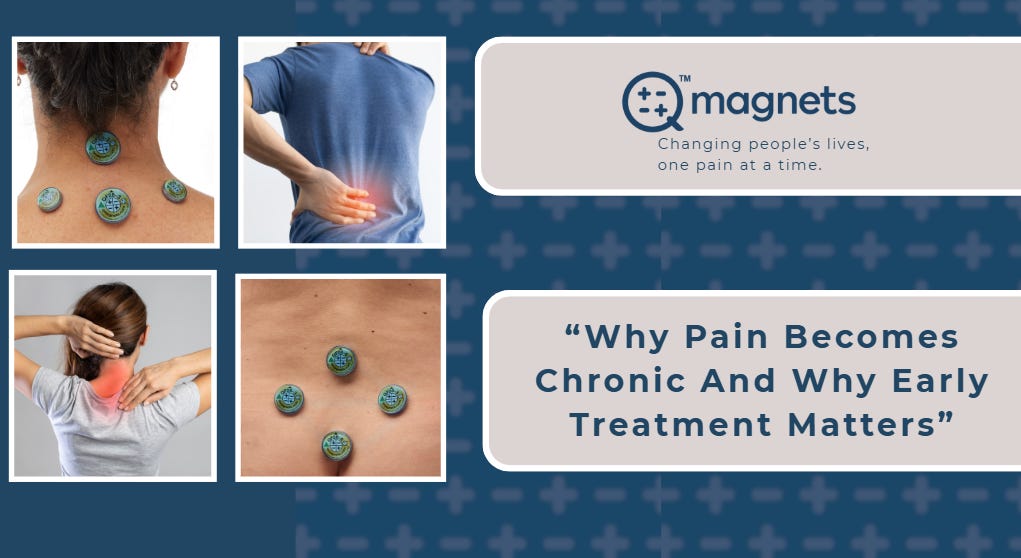
Why Pain Becomes Chronic And Why Early Treatment Matters
Field, Dose and Placement in Magnetic Field Therapy
Magnetic Therapy