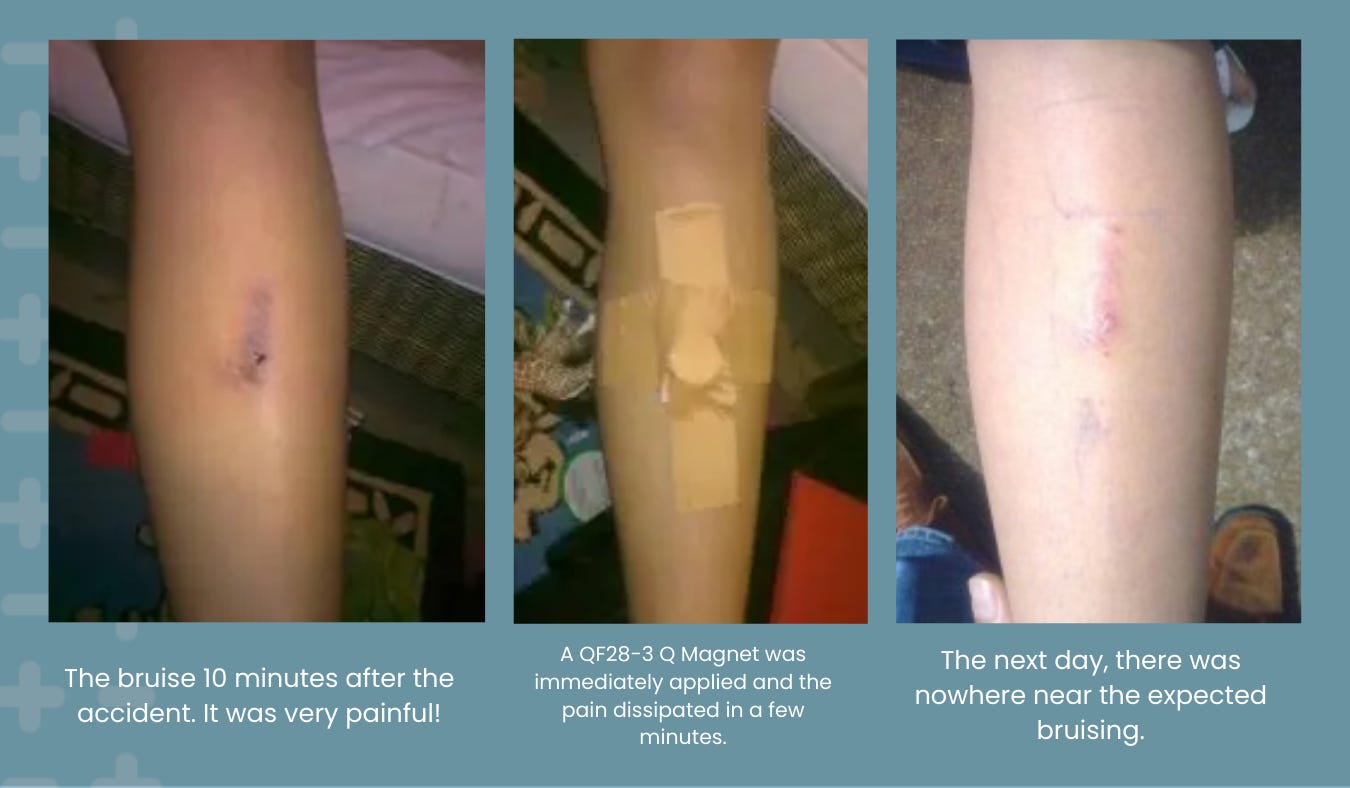
Early recovery is shaped by biological responses that begin within minutes of injury or trauma. Understanding these early processes helps explain why timing matters.
These processes tend to evolve rapidly during the first 6 to 24 hours, which is why early intervention has long been emphasized in both first aid and post-procedure care.
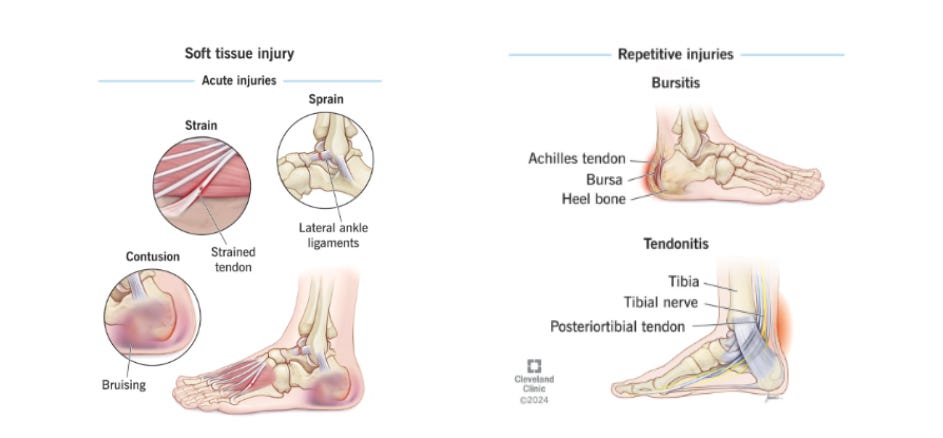
When the body experiences injury or undergoes a surgical or dental procedure, a series of biological responses begin almost immediately. These early changes can influence swelling, pain, bruising, and overall comfort in the days that follow. For decades, first-aid guidance has emphasized the RICE framework: Rest, Ice, Compression, Elevation.
For many years, first aid advice for sprains, strains and soft-tissue injuries centred on the RICE framework: Rest, Ice, Compression and Elevation. Q Magnets users later adapted this into RICEM by adding M for Magnets as an adjunct to these familiar early-care strategies.
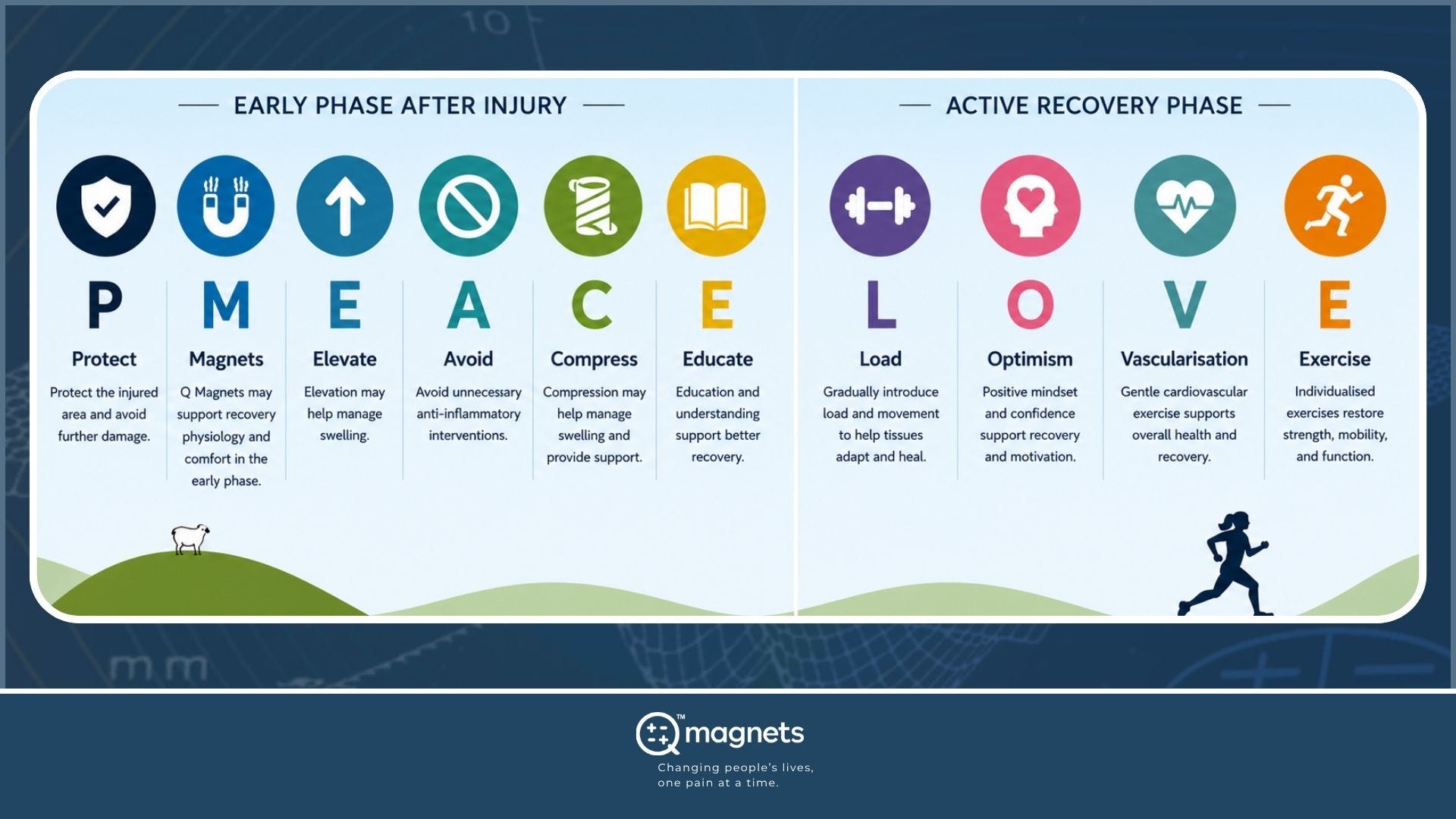
Injury-management guidance has since evolved. Many sports physicians, physiotherapists and sports therapists now use the PEACE & LOVE framework, which places greater emphasis on education, appropriate early protection and active rehabilitation.
Q Magnets does not replace the established PEACE & LOVE framework. Instead, we use the term PMEACE & LOVE as a Q Magnets adaptation, adding M for Magnets to show where Q Magnets may fit as a complementary strategy.
PMEACE & LOVE is not an officially recognised clinical framework. PEACE & LOVE remains the established injury-management framework.
Whether trauma results from a fall, sports injury, surgery, or dental treatment, the body responds in broadly similar ways.
In the first hours following tissue damage, several processes begin:
Small blood vessels may rupture, leading to bruising or haematoma
Inflammatory signals increase blood flow and fluid movement into the area
Swelling and tissue pressure rise
Pain signaling becomes more active
Surrounding tissues may experience secondary stress
From RICE and RICEM to PEACE & LOVE
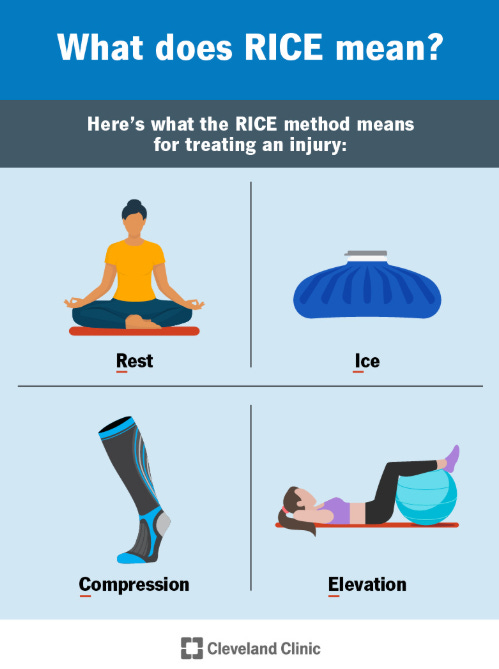
Rest
Rest reduces further mechanical stress on injured tissue. Continued movement or loading can increase irritation and prolong inflammation.
Ice
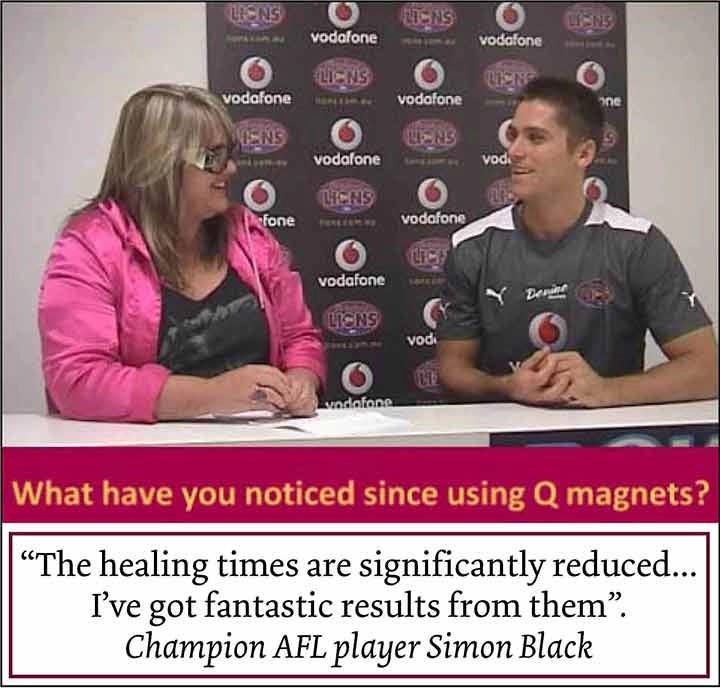
Cold application is commonly used early to help manage pain and swelling. Ice is typically applied intermittently and with a barrier to protect the skin. Many sports teams using Q Magnets will place the ice over the magnet.
Compression
Compression helps limit excessive fluid accumulation by applying gentle, even pressure to the affected area.
Elevation
Elevation supports venous and lymphatic drainage by positioning the injured area above heart level when practical.
Together, these measures formed the traditional RICE approach to early injury management. However, contemporary soft-tissue recovery guidance increasingly favours PEACE & LOVE, which combines appropriate early protection with education, progressive loading, cardiovascular activity and exercise.
From RICEM to PMEACE & LOVE
While RICEM remains a useful way to describe how some Q Magnets users historically combined magnets with traditional first-aid measures, the more contemporary framework for soft-tissue recovery is PEACE & LOVE.
The established framework includes:
PEACE
P – Protect: Avoid activities that may aggravate the injury during the early phase.
E – Elevate: Elevate the affected area where appropriate.
A – Avoid unnecessary anti-inflammatory interventions: Inflammation is part of the normal healing response, so anti-inflammatory approaches should not be used automatically unless clinically indicated.
C – Compress: Compression may help manage swelling.
E – Educate: Encourage realistic expectations and active participation in recovery.
LOVE
L – Load: Gradually reintroduce movement and loading as symptoms allow.
O – Optimism: Positive expectations and confidence can support recovery.
V – Vascularisation: Introduce pain-free cardiovascular activity where appropriate.
E – Exercise: Use appropriate rehabilitation exercises to restore mobility, strength and function.
Q Magnets refers to this adaptation as PMEACE & LOVE, with the additional M representing Magnets during the early phase of recovery.
M – Magnets
Magnets are not part of the official PEACE & LOVE framework. PMEACE & LOVE is the Q Magnets adaptation, created to show where Q Magnets may fit during the early recovery phase.
Q Magnets may be applied as early as practical as a complementary measure. They are intended to sit alongside appropriate protection, compression, education and professional care—not replace them.
As recovery progresses, the LOVE phase remains focused on progressive loading, cardiovascular activity and exercise.
Many Q Magnets users report that timing matters and choose to apply the magnets as early as practical after injury, surgery or dental trauma. These reports reflect individual experiences and do not establish that early application will produce the same result for everyone.
Commonly reported experiences include:
Lower perceived pain intensity
Reduced visible bruising or swelling
Improved comfort in the days following trauma
These observations reflect individual experiences rather than guaranteed outcomes.
Bruising, Haematoma, and Soft-Tissue Injury
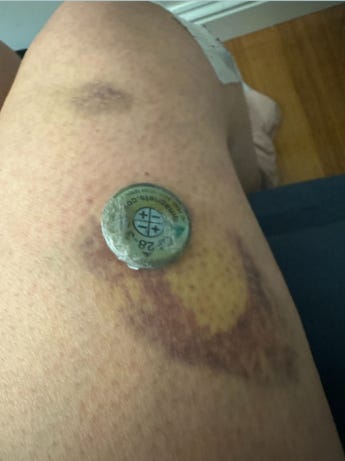
Bruising and haematoma occur when blood leaks from damaged vessels into surrounding tissues. This contributes to swelling, discoloration, and tenderness.
A published study by Man et al. examined the use of static magnetic fields in acute soft-tissue injury and reported faster resolution of bruising and swelling compared with controls. While no single study provides definitive conclusions, these findings align with reports from users who apply magnets early rather than later.
It is important to distinguish between controlled study results and personal experiences. Individual responses vary depending on injury type, severity, timing, and overall health.
When Trauma Is Planned: Dental and Surgical Procedures
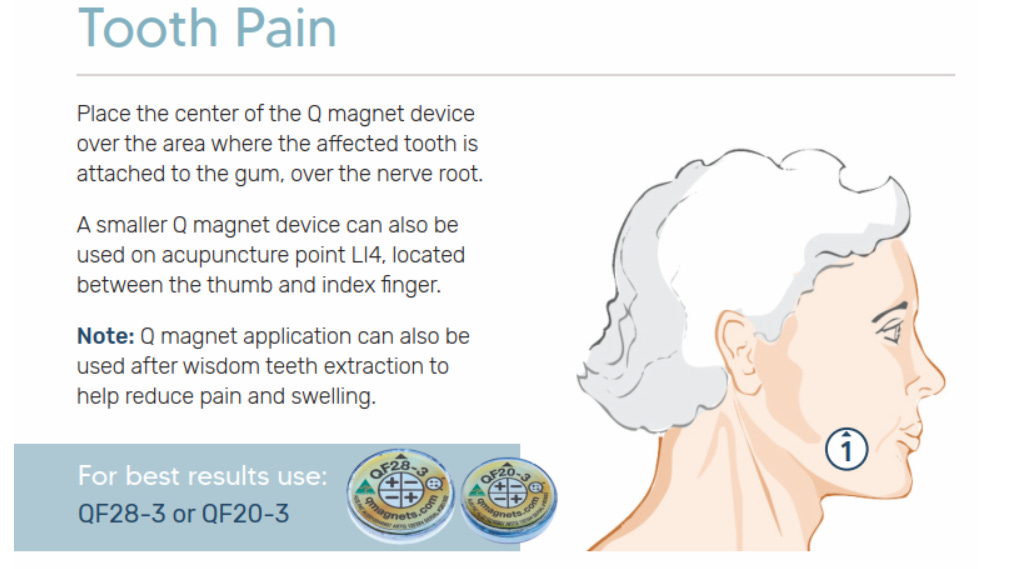
Accidents are unpredictable. Many medical and dental procedures are not.
Examples include:
Wisdom tooth extraction
Periodontal surgery
Gum grafts or dental implants
Because the timing of tissue trauma is known, some people choose to apply Q Magnets before the procedure and continue afterward as part of recovery.
The concept of pre-treatment is well established in healthcare. Medication planning, procedural preparation, and tissue management are routine. Q Magnet pre-application extends this logic.
Real-World Experiences With Early Application
Some individuals have chosen to share their experiences with early Q Magnet application following medical or dental procedures. These accounts are shared with permission and are not paid endorsements.
Jeanette: Following surgical gum grafting by a periodontist
👉https://qmagnets.com/no-pain-after-q-magnet-application-with-surgical-gum-draft-by-periodontist/
Jeanette underwent a surgical gum graft performed by a periodontist. She reported experiencing minimal pain following the procedure and noted that she was surprised by how comfortable her recovery felt compared with what she had expected beforehand.
Her experience highlights the role that early application played for her personally. It does not suggest that similar outcomes should be expected by others.
Elizabeth: Post-procedure recovery
👉https://qmagnets.com/i-felt-well-enough-to-return-to-work-the-next-day/
Elizabeth described feeling well enough to return to work the day after her procedure. This stood out to her because it was not something she had anticipated prior to treatment.
As with all individual reports, experiences vary. These stories do not predict outcomes but help illustrate a recurring theme seen in user feedback: early application is often mentioned as meaningful.
Safety Notes and Realistic Boundaries
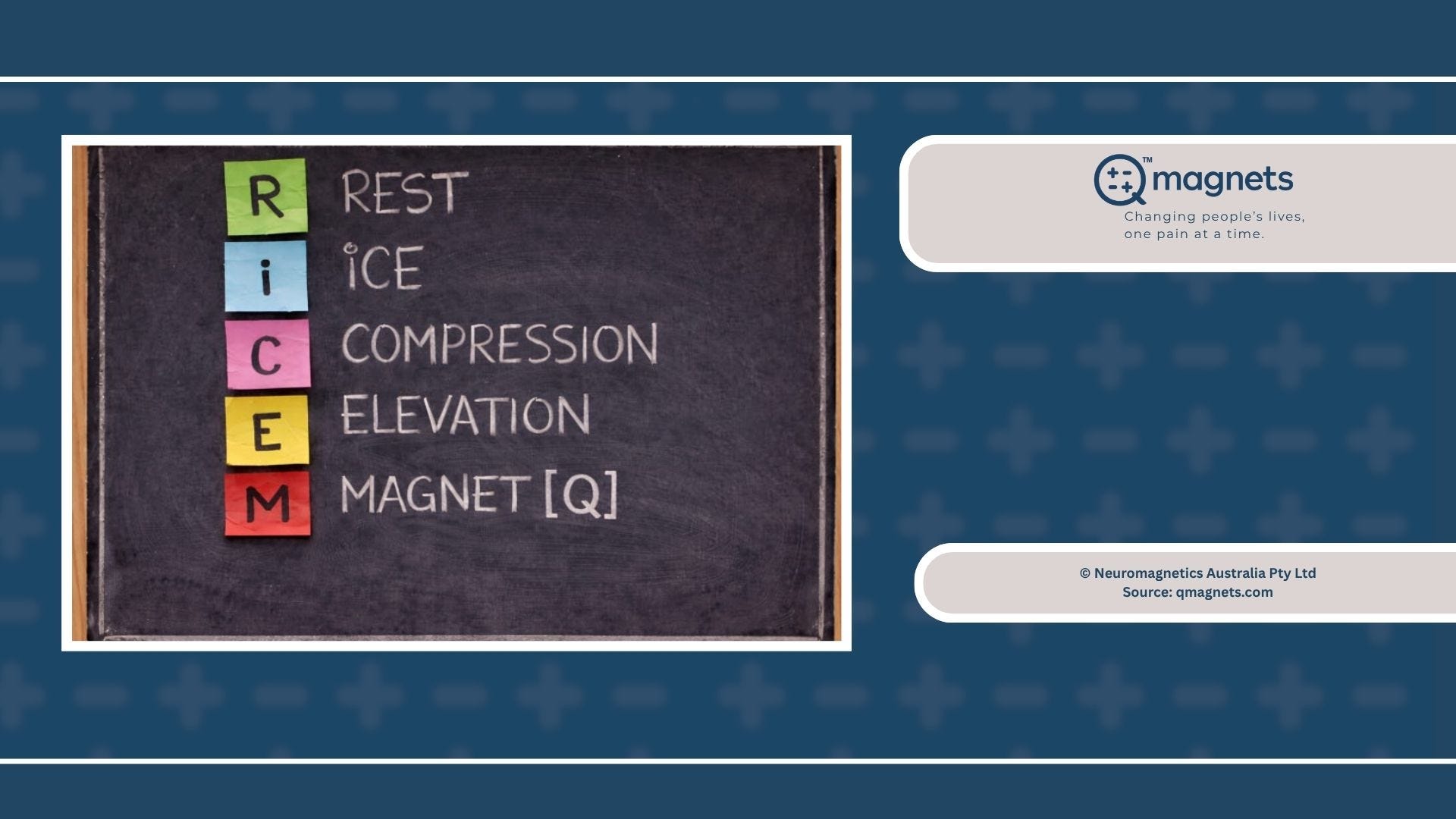
PMEACE & LOVE is intended to illustrate where Q Magnets may fit within modern injury management. It complements professional care rather than replacing it.
Important safety considerations include:
Magnets are not a substitute for medical or dental treatment
Swallowing two or more magnet is a medical emergency and requires immediate attention
Persistent pain, increasing swelling, signs of infection, or unexpected symptoms should always be assessed by a qualified healthcare professional
No early-intervention framework can guarantee outcomes. Individual responses depend on many factors, including injury type, timing, and overall health.
A Simple Summary of PMEACE & LOVE
During the early phase:
Protect: Reduce activities that may aggravate the injury.
Magnets: Q Magnets may be applied as an adjunct as early as practical.
Elevate: Elevate the injured area where appropriate.
Avoid unnecessary anti-inflammatory interventions: Use them only when clinically appropriate.
Compress: Apply suitable compression where appropriate.
Educate: Understand the injury and take an active role in recovery.
As recovery progresses:
Load: Reintroduce movement and loading gradually.
Optimism: Maintain realistic and positive expectations.
Vascularisation: Introduce appropriate cardiovascular activity.
Exercise: Restore mobility, strength and function through rehabilitation.
PEACE & LOVE is the established framework. PMEACE & LOVE is the Q Magnets adaptation, adding M for Magnets as a complementary measure.
For some people, PMEACE & LOVE provides a practical way to understand where Q Magnets may fit within contemporary injury recovery. It complements the established PEACE & LOVE framework rather than replacing it.
You can read more about how Q Magnets have historically been used during the early stages of injury recovery here:
👉https://qmagnets.com/recover-faster-after-bruisinghaematoma-and-soft-tissue-injuries-with-q-magnet-therapy/
Until next time, stay curious and stay well,
James Hermans and the Q Magnets Team
If you haven’t yet heard about our competition, you can win a set of Q magnets by recording your injury recovery experience.
See this previous post for all the details.
👉https://www.news.qmagnets.com/p/when-even-were-surprised-an-early
Competition T&Cs (Summary):
Open to citizens of any country aged 18+. Game of skill. Three (3) winners will each receive one Q Magnets General Use Set. Competition runs for 3 months from publication date. Entries must use genuine Q Magnet products. Full Terms & Conditions apply.
👉 View full T&Cs at qmagnets.com/competition-terms/
Featured Articles
Q magnets Powerful Effects on Haematomas, Soft Tissue Injuries and Post Surgery.
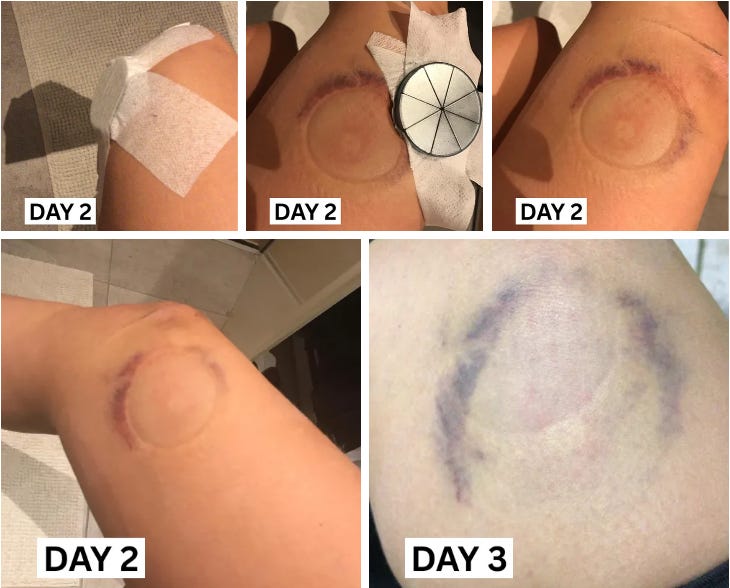
How athletes are using Q Magnets to help get back to their sport sooner…
Q Magnet therapy for a shin bruise with a child.