Greetings, from Melbourne, Australia
The biological effects of static magnetic fields are a little like sport.
Few people truly understand the mechanics.
Many have strong opinions.
Some are convinced it’s transformative.
Others dismiss it outright.
Meanwhile, quietly, over the past 60 years - alongside the development of nuclear magnetic resonance and MRI - serious research into static magnetic fields has been conducted, contributing to discoveries recognised by multiple Nobel Prizes.
That history alone should prompt a more careful question:
Does static magnetic field exposure itself produce measurable biological effects?
A large research program led at Semmelweis University sought to answer exactly that.
Across microbial studies, animal pain models, and human trials, three themes emerged.
Not All Magnetic Fields Behave the Same
Uniform static fields often produced little or inconsistent biological response.
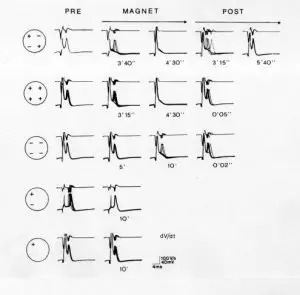
In contrast, inhomogeneous fields with strong spatial gradients showed measurable effects, including increased pain thresholds in both animal models and human volunteers.
Structure matters.
Biology does not respond to slogans.
It responds to physics.
There Is a Physiologic “Window”
When researchers adjusted field parameters, intensity, geometry, gradient, and exposure duration, analgesic effects improved.
Too weak? Minimal effect.
Wrong configuration? Minimal effect.
Optimized? Measurable response.
That is not mysticism.
That is dose-response science.
The Body Mediates the Effect
Across inflammatory and pain models, the magnetic exposure did not “force” healing.
Instead, results suggested modulation of the organism’s own pain and inflammatory pathways.
The body did the work.
The field acted as the stimulus.
That distinction is important.
A Note on Credibility
The research program behind these findings was led by physicist Dr. János F. László and colleagues at Semmelweis University in Budapest.
In his book From Microbe to Man, which synthesised years of in vitro, in vivo, and human investigations into static magnetic fields, both Neuromagnetics Australia Pty Ltd. and James Hermans were acknowledged among contributors who supported and influenced the work.

We mention this not as a claim of ownership, but as context.
For years, we’ve spoken about a “window of effectiveness.”
The research suggests that idea was not a guess.
Field | Dose | Placement.
Biology responds to physics.
Plants respond to physics.
Animals respond to physics.
Humans respond to physics.
The real question is not whether magnets “work.”
The question is whether the field is engineered correctly.
Until next time, stay curious and stay well,
James Hermans and the Q Magnets Team
Featured Articles:
Magnets, Crops, and North–South Folklore: Why Field Gradient Matters More Than Polarity

Positioning Neuromagnetics in the “window of effectiveness” for magnetic therapy.
Magnetic Field Gradients