This week, a surprising physics discovery made headlines and it may have interesting implications for how we think about electromagnetic fields in biology.
For nearly two centuries, physics has treated light as electrically neutral, having no charge. While light can be reflected, focused, or slowed down by materials, its path should not be pushed sideways simply by a magnetic field. That should only be possible if light had a charge.
A new experiment published in Nature Scientific Reports challenges that assumption. When light was sent through a specially structured transparent material inside a strong magnetic field, the beam emerged slightly shifted, as though it had been gently nudged sideways by the field itself.
Light bent in a magnetic field? ~ something it should not do.
This is not the familiar Faraday Effect (where only the polarisation of light rotates).
This new behaviour affected the trajectory of the beam itself, something conventional electromagnetism says should not happen to a neutral wave like light.
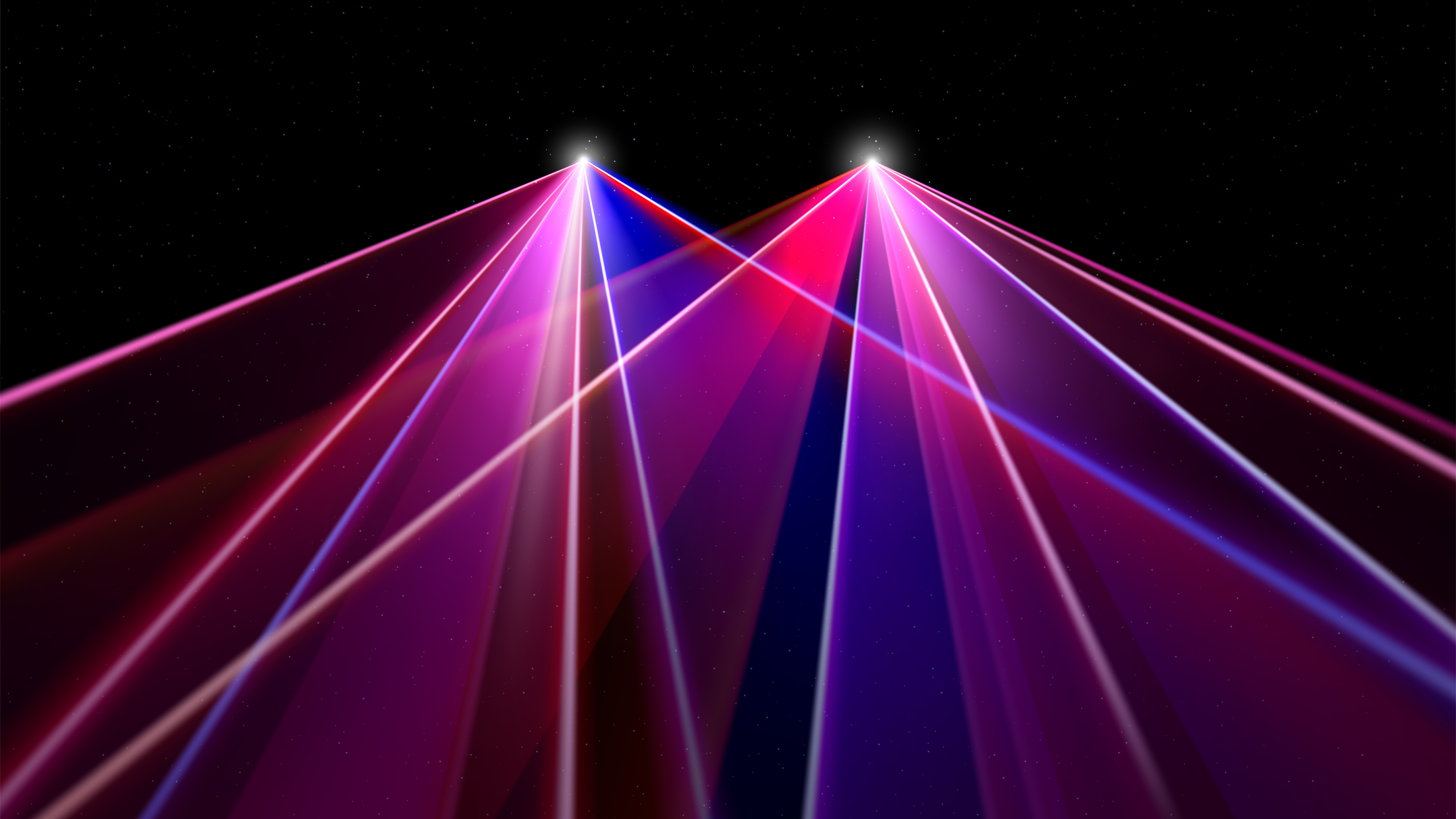
Under normal circumstances, sending a beam of light through a magnetic field that points in the same direction shouldn’t change the path of the light at all. Textbooks say the beam should continue perfectly straight.
But in this new experiment, the researchers used a special “handed” transparent material. When a strong magnetic field was applied, the material changed in a very subtle, uneven way, enough to push the light slightly sideways. That tiny sideways shift shouldn’t be possible under traditional physics, which is why the result is so intriguing.
In these conditions, the light behaved as if it possessed a tiny effective charge — not because photons literally have charge, but because new, subtle electromagnetic interactions become measurable.
This doesn’t overturn physics, but it does reveal something important:
Even the most “settled” aspects of electromagnetic theory still contain surprises.
Why This Matters for Magnetic Field Therapy
This discovery isn’t about biological tissue or therapy, but the principle is highly relevant.
Biology is electrically active down to the cellular level:
ion channels
membrane potentials
action potentials
signal transduction
Static magnetic fields interact with this electro-physiology in ways science is still mapping. The vast majority of what people think they “know” about magnets in biology comes from simple bipolar magnets. Not from gradient-rich multipolar static magnetic fields, such as those used in Q Magnets.
When physics discovers a new electromagnetic behaviour in something as intensely studied as light, it reinforces a broader point:
We still do not fully understand all the ways electromagnetic fields influence the natural world, especially complex biological systems.
This is exactly why Q Magnets focus on:
magnetic field gradients
depth of penetration
multipolar configurations
neuromodulation principles (Field | Dose | Placement)
Clinicians and patients consistently report improvements in pain, mobility, and function. These effects may be tapping into biological responses that future science will eventually describe more completely. Just as this recent experiment revealed new electromagnetic behaviour in light.
We are careful not to overstate the connection.
But discoveries like this keep the scientific door wide open.
The electromagnetic world is still giving up new secrets.
And static magnetic fields applied in the right way may hold far more potential than conventional wisdom suggests.
REFERNCE:
Until next time, stay curious and stay well.
James Hermans and the Q Magnets team.
Featured Articles:
Magnetic Revolution: Why magnetism is a new frontier in medical research.

Enhancing Photobiomodulation Therapy with Q Magnets: A Synergistic Approach to Pain Relief and Tissue Healing

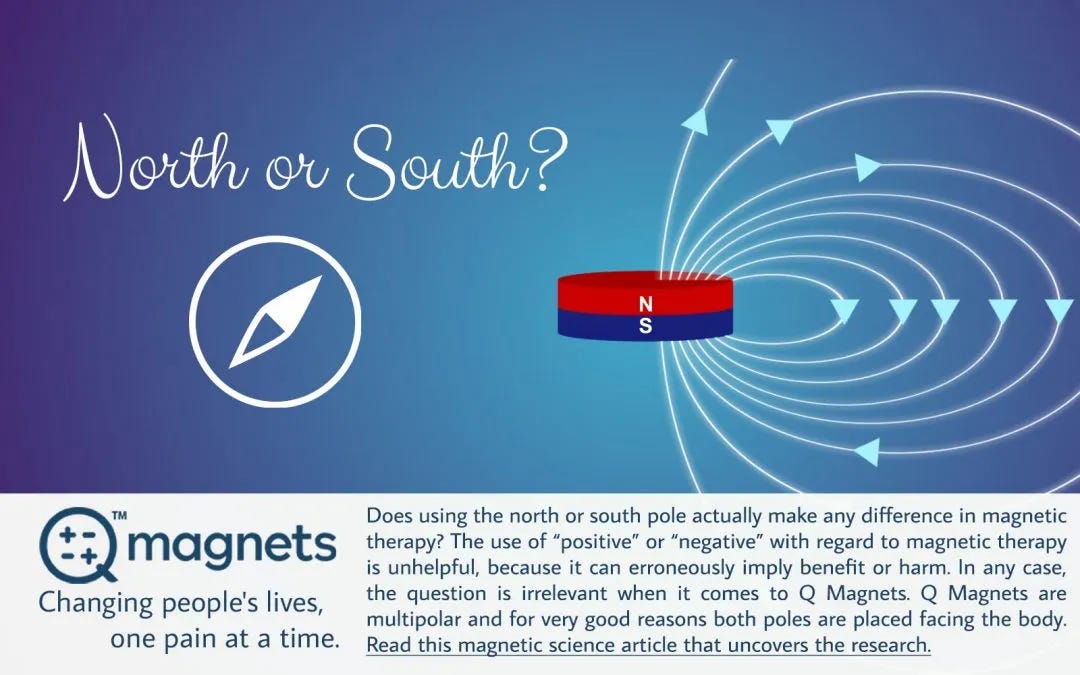
Is there any difference in using the north or south pole of a magnet?